Why a Cover Letter is Crucial for Career Changes
Changing careers can be a daunting task, and a well-crafted cover letter is your secret weapon. It serves as a bridge, connecting your past experiences to your future aspirations, and is the first chance to make a positive impression. Unlike a resume, which provides a factual overview, a cover letter allows you to tell your story, explaining why you’re making a career shift and how your skills align with the new role. In a field of applicants, this document personalizes your application, allowing you to speak directly to the hiring manager. A strong cover letter demonstrates your genuine interest, providing context and depth, and significantly increases your chances of getting an interview. It shows you’ve taken the time to understand the company and the position, making you stand out from the crowd.
Highlighting Transferable Skills
One of the most effective strategies for a successful career change cover letter is highlighting transferable skills. These are the skills you’ve gained in your previous roles that are relevant and applicable to your desired new field. Think about communication, problem-solving, leadership, project management, and any technical skills. Identify where you have used these skills. For example, if you’re transitioning from marketing to project management, emphasize your skills in project planning, stakeholder communication, and deadline management. Show how these skills apply to your new field, making it clear that even though your industry is changing, your capabilities remain valuable. Provide specific examples and use action verbs to describe how you’ve applied these skills in the past, showcasing your readiness and ability to excel.
Identifying Your Key Skills

Start by identifying the core skills needed for the new role. Review job descriptions and make a list of the required competencies. Then, analyze your existing skill set and find overlaps. This is where self-assessment becomes important. Consider taking online quizzes or seeking feedback from former colleagues to get a clearer picture of your strengths. It’s essential to be honest with yourself about your skill levels. Once you have your key skills identified, prioritize the most relevant ones for the specific job. This helps tailor your letter to each application, demonstrating that you have done your research and are a good fit for the role.
Showcasing Accomplishments
Don’t just list your responsibilities. Instead, showcase your accomplishments using the STAR method (Situation, Task, Action, Result). Briefly describe the situation, the task you were assigned, the actions you took, and the results achieved. This provides context, illustrates your capabilities, and proves your value. For example, instead of saying “Managed social media accounts,” say “Increased social media engagement by 40% in six months by implementing a new content strategy.” Quantifiable results add credibility and make your accomplishments more impactful, especially when changing careers. Highlight accomplishments that align with the new role’s requirements and emphasize your achievements, showing how your skills can translate to success in your desired field.
Quantifying Your Achievements
Whenever possible, quantify your accomplishments. Numbers provide concrete evidence of your impact and make your claims more persuasive. Use percentages, dollar amounts, or specific metrics to demonstrate your successes. For instance, if you improved customer satisfaction, state the percentage increase. If you saved the company money, provide the amount. If you led a team to exceed sales targets, mention the percentage above the target. Quantifying your achievements adds depth and shows the value you bring to the table. This technique is particularly effective when changing careers, as it showcases the tangible results of your transferable skills. These specifics make you stand out and help the hiring manager understand your potential contributions.
Addressing the Career Change Directly

It is essential to address the career change directly in your cover letter. Avoid vague statements or attempting to hide the shift. Acknowledge your transition and frame it positively. Briefly explain your motivations for the change, focusing on the aspects that align with the new role. Explain why you are seeking a role in a new field and how your skills and experiences make you a strong candidate. This proactive approach demonstrates honesty, confidence, and clarity. It shows that you have thought about your decision and are prepared to take on a new challenge. Being upfront about your career change also helps manage expectations and reduces the chance of any surprises during the interview stage.
Explain Your Motivation
Provide a concise explanation of why you are making a career change. What sparked your interest in the new field? What are you hoping to achieve? Align your motivations with the values and goals of the target company. If you are passionate about technology and are transitioning from a marketing role, mention how you’ve always been intrigued by tech, and how your marketing experience has prepared you to succeed in a tech-focused role. Your explanation should be genuine and compelling, highlighting the reasons behind your career aspirations. Show that this change is driven by your interests, your enthusiasm, and your commitment to the new career path, showing that this is not just a random choice but a well-considered decision.
Showcase Your Research
Demonstrate that you have researched the new field and the target company. This shows your genuine interest and initiative. In your cover letter, mention specific aspects of the company or industry that resonate with you. This could be their mission, values, or recent projects. Talk about how your skills and experiences align with their needs. Mention any relevant industry news, trends, or developments that you’ve been following. By demonstrating that you have invested time in understanding the new field and the company, you position yourself as a candidate who is serious about making a career change. This effort shows that you are not just applying for any job but that you’re strategically targeting opportunities that are a good fit for your aspirations.
Structuring Your Cover Letter Effectively

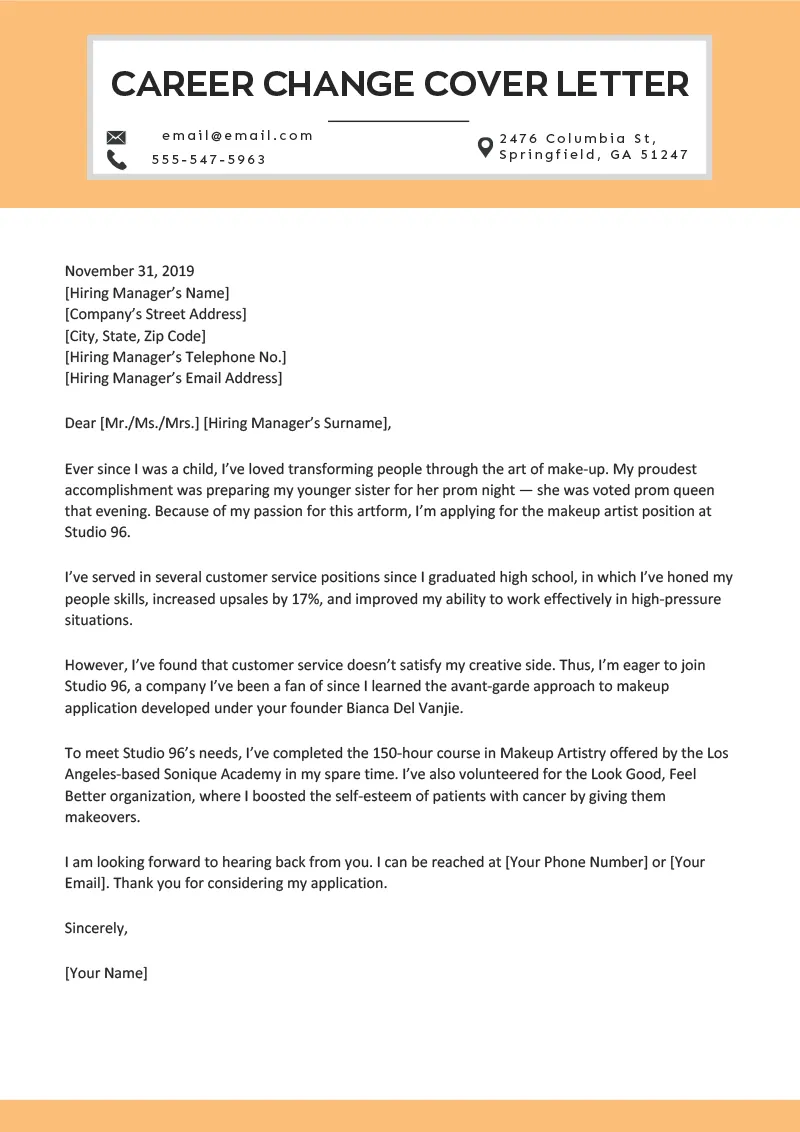
A well-structured cover letter guides the reader and highlights the most important information. Divide your letter into clear paragraphs with a logical flow. The structure includes an opening, a body that showcases your skills and addresses the career change, and a strong closing. Each section should serve a specific purpose, and together they should create a cohesive narrative. Proper formatting and organization are crucial. Using a clear and professional font, maintaining consistent margins, and keeping the letter concise will ensure your message is easy to read and understand. Aim for a professional tone and avoid jargon or overly casual language. Make it easy for the hiring manager to grasp your key strengths and motivations quickly.
Opening Paragraph Essentials
The opening paragraph is your first opportunity to grab the reader’s attention. Start by stating the position you are applying for and where you found the job posting. Briefly introduce yourself and the core purpose of your letter. In the first sentence, make it clear that you are applying for the role and mention something specific that caught your eye about the opportunity. You can briefly touch upon your motivation for the career change. Keep it concise and engaging, highlighting the key skills and experiences that make you a strong candidate. Your goal is to pique the reader’s interest and encourage them to continue reading the letter. This initial impression sets the tone for the entire application, so make it count.
Middle Paragraph Strategies
The middle paragraphs are the heart of your cover letter. This is where you highlight your transferable skills, provide examples of your accomplishments, and address your career change directly. Use separate paragraphs to discuss each key point. Start by identifying the skills and experiences from your previous roles that are relevant to the new position. Showcase your accomplishments using the STAR method. Quantify your achievements whenever possible to add impact. Explain your motivations for the career change, ensuring that you align your goals with the new role. This section is where you bridge the gap between your past experiences and future aspirations. It demonstrates how you are well-suited for the role.
Closing Paragraph: Call to Action

The closing paragraph is an opportunity to reinforce your interest and next steps. Reiterate your enthusiasm for the role and the company. Thank the reader for their time and consideration. Include a clear call to action, such as inviting them to contact you or suggesting a meeting. Make sure to express your eagerness to discuss your application further and to learn more about the opportunity. Proofread carefully to avoid any typos or grammatical errors. Your call to action should be polite, professional, and assertive. This final impression can greatly influence the hiring manager’s decision, so make it count, ensuring that you are inviting further contact.
Tailoring Your Letter to the New Field
Every cover letter should be tailored to the specific job and the industry. General cover letters do not make a strong impact, and that is especially crucial for a career change. Research the industry and the specific role to understand its requirements and challenges. Use industry-specific keywords and phrases to demonstrate that you understand the field’s language. Highlight your relevant skills and experiences. If you have completed any relevant training or certifications, be sure to mention them. Emphasize any projects, experiences, or skills that align with the job description. Show that you have invested time and effort in understanding the new field and the company, making you a valuable and informed candidate.
Researching the Target Company
Before writing your cover letter, dedicate time to researching the target company. Explore their website, social media profiles, and any recent news or press releases. Understand their mission, values, culture, and recent projects. Identify the company’s key priorities and goals. This information allows you to tailor your cover letter, aligning your skills and experiences with their needs. Mention specific aspects of the company that resonate with you. Mention how your skills and experiences align with their mission and how you can contribute to their goals. Showing your enthusiasm for the company is key. This effort will demonstrate genuine interest and make you stand out from candidates who are not prepared.
Using Industry-Specific Keywords

Incorporate industry-specific keywords throughout your cover letter. Review the job description and identify the key skills, technologies, and phrases used by the company. Include relevant keywords in your descriptions of your skills and experiences. This shows that you understand the industry’s language. However, be cautious about keyword stuffing. Focus on using keywords naturally within the context of your writing. Integrate them into sentences, emphasizing your skills and achievements. When the hiring manager reads your letter, they will see your understanding of the industry’s requirements. This targeted approach makes your application more relevant and improves the chances of getting noticed and shows your potential contributions.
Formatting and Proofreading Tips
Ensure your cover letter is well-formatted and free of errors. Poor formatting and typos reflect negatively on your attention to detail. Use a professional font like Arial or Times New Roman and maintain consistent margins. Keep your cover letter concise, aiming for one page. Use bullet points or numbered lists to highlight key skills or achievements, improving readability. Make sure the font is readable and use appropriate spacing. Proofread your letter multiple times, and consider having someone else review it. A clean and well-formatted letter is more likely to be taken seriously and will showcase your professionalism. The goal is to make your letter as easy and pleasant to read as possible, maximizing your chances of getting selected.
Formatting for Readability
Formatting your cover letter for readability is very important. Use a professional font size (11 or 12 points). Maintain consistent margins (typically one inch on all sides). Use clear and concise paragraphs with appropriate spacing. Break up large blocks of text with bullet points or numbered lists to highlight key information. Avoid overly long sentences or complex phrasing. Ensure that your cover letter is easy on the eyes, because readability is paramount to making a good impression. A well-formatted letter is more likely to be read and understood. If it’s difficult to read, the hiring manager will struggle to comprehend your message, which diminishes your impact.
Proofreading and Editing Checklist

Thorough proofreading and editing are essential. Before submitting your cover letter, go through a checklist to catch any errors. Check for spelling mistakes, grammatical errors, and punctuation issues. Ensure that you have used the correct formatting. Verify the accuracy of names, dates, and contact information. Read your letter aloud to catch any awkward phrasing or unclear sentences. Consider having a friend, family member, or career counselor review your letter. Multiple sets of eyes can catch errors you might have missed. Correct any inconsistencies, rephrase confusing sentences, and make sure your message is clear and concise. A polished cover letter reflects your attention to detail and shows professionalism.