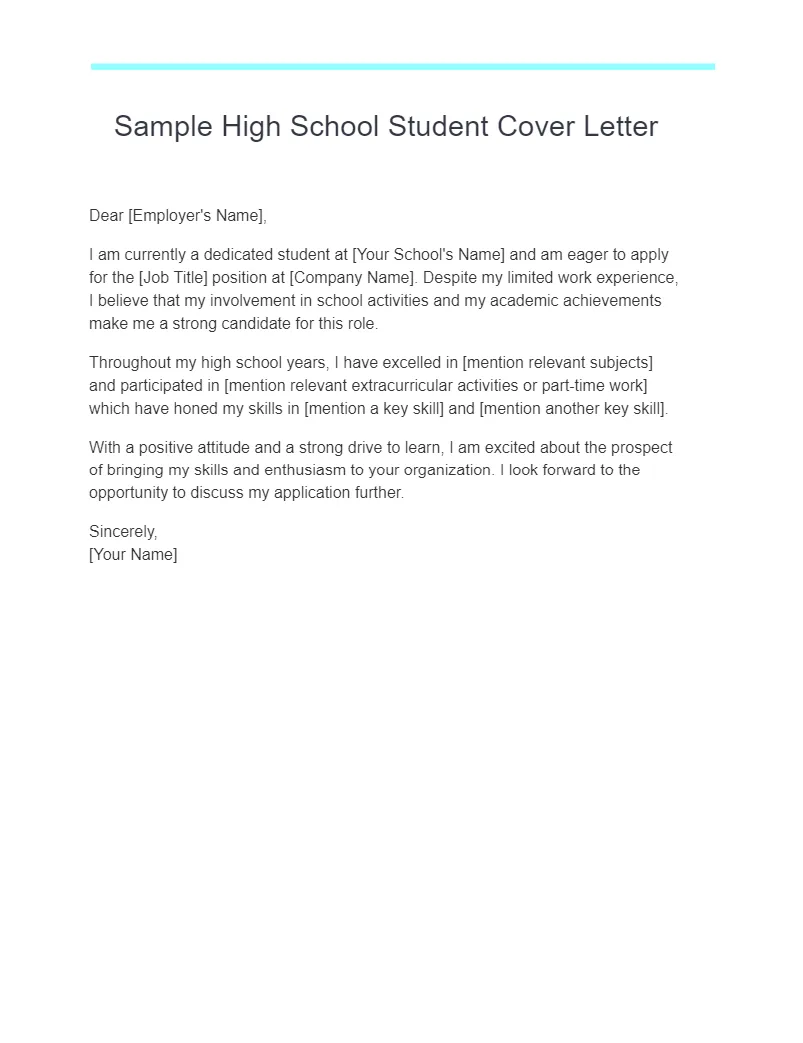
Understanding the Cover Letter’s Power
As a high school student stepping into the job market or seeking volunteer opportunities, the cover letter is your first impression, a crucial introduction that can significantly impact your chances of success. Unlike a resume, which is a factual summary of your qualifications, the cover letter offers you the opportunity to narrate your story, express your enthusiasm, and demonstrate how your skills and experiences align with the specific requirements of the position. This document allows you to go beyond the bullet points and showcase your personality, your aspirations, and your understanding of the role or opportunity you are applying for. A well-crafted cover letter speaks volumes, setting you apart from other applicants and making a compelling case for why you deserve consideration. It is your chance to shine, revealing your potential and demonstrating your eagerness to contribute. Understanding the power of a cover letter is the first step in mastering this essential tool for high school students.
Why High School Students Need Cover Letters
While high school students may have limited professional experience, a cover letter is all the more important. It provides the context for your experiences, even if they are not directly related to the job. Whether you are applying for a part-time job, an internship, or a volunteer position, a cover letter allows you to explain why you are interested, what skills you have developed, and how you can contribute. It shows employers you are serious about the opportunity, have taken the time to research the role, and are capable of communicating effectively. For high school students, a cover letter is an opportunity to highlight soft skills, academic achievements, extracurricular activities, and volunteer experiences, showcasing your potential, work ethic, and personality, setting the stage for a positive interview and demonstrating your readiness to learn and grow within the role. The cover letter helps you bridge the gap between limited work history and the skills and qualities employers seek.
Key Components of a Winning Cover Letter

A winning cover letter is a carefully constructed document, composed of several key components, each playing a vital role in presenting you in the best possible light. It begins with your contact information and the recipient’s details, setting the stage for professionalism. Next, the salutation and the opening paragraph capture the reader’s attention and state the purpose of your letter. The body of your letter is the core, where you showcase your skills, experiences, and how they relate to the specific role. This section includes details about your academic achievements, extracurricular activities, volunteer work, and any relevant skills. A strong closing paragraph expresses your gratitude, reiterates your interest, and indicates your next steps, such as expressing your availability for an interview. Proper formatting, including clear language, and attention to detail is crucial throughout the letter. Finally, proofreading is essential to eliminate errors and ensure your cover letter is polished and professional.
Contact Information Section
The contact information section is your first opportunity to make a professional impression. It should include your full name, address, phone number, and email address. Ensure your email address is professional-sounding and easy to read. Place this section at the top of your letter, typically aligned to the left or right. Make sure all the details are accurate. Below your contact information, include the date and the recipient’s details. This section should include the hiring manager’s name, title, the company name, and the company’s address, if you know it. If you are unsure of the hiring manager’s name, research the company website or use a general title like “Hiring Manager.” These details demonstrate that you have taken the time to prepare a professional application and pay attention to detail.
Crafting a Compelling Opening
Your opening paragraph is your chance to grab the reader’s attention and set the tone for the rest of your cover letter. It should immediately state the purpose of your letter, indicating the specific position or opportunity you are applying for. If you are responding to a job posting, mention where you saw the advertisement. Express your enthusiasm for the role and the company. To make your opening more compelling, briefly highlight a key skill or experience that aligns with the job requirements. Personalize your opening by showing genuine interest in the company or position, making it clear why you are a good fit, and providing a hint of the value you bring to the table. Avoid generic phrases and cliches. A strong opening gets the reader interested and encourages them to continue reading, making your cover letter stand out from the pile.
Highlighting Your Skills

High school students should focus on their skills and how they are applicable to the role. Even without extensive work experience, you can highlight the skills you have developed through academics, extracurricular activities, and volunteer work. Identify key skills the employer is looking for, such as communication, teamwork, problem-solving, or time management. Provide specific examples of how you have demonstrated these skills in the past. For instance, if you were a team captain, describe how you managed a team, resolved conflicts, and achieved a common goal. If you worked on a school project, explain how you collaborated with others, researched information, and presented your findings. This approach provides concrete evidence of your capabilities, showing the employer that you are capable of succeeding in the role.
Academic Achievements and Coursework
Your academic achievements and relevant coursework are vital to include in your cover letter. Highlight any honors, awards, or special recognition you have received. If you have taken advanced courses that are applicable to the job, mention them. For example, if you are applying for a position in the tech industry, include information on coding classes or computer science courses. If you are applying for a role that requires good writing skills, mention your English classes, debate team participation, or any writing projects you have completed. These details show your commitment to learning, your academic strengths, and your preparation for the role. Including specific examples of your academic accomplishments will add credibility to your application.
Extracurricular Activities and Clubs
Participation in extracurricular activities and clubs demonstrates your interests, skills, and ability to work with others. Detail your involvement in school clubs, sports teams, student government, or other organizations. Describe your role within the club and the responsibilities you had. Highlight any leadership positions you held, such as team captain or club president. Explain any accomplishments or contributions you made to the club. For example, if you were on the debate team, you can showcase your public speaking and critical thinking skills. If you are involved in a sports team, you can highlight your teamwork and discipline. These details reveal your ability to balance commitments, work as part of a team, and develop important skills, like time management and leadership.
Volunteer Experience

Volunteer experience is an important aspect of your cover letter, demonstrating your commitment to helping others and developing important skills. Include details of any volunteer work you have done, such as at a local charity, community organization, or school events. Describe your responsibilities and the tasks you performed. Highlight any skills you used, such as communication, organization, or problem-solving. If you have been a volunteer for a long time or have taken on leadership roles, be sure to mention this. Your volunteer work shows your dedication, work ethic, and your willingness to contribute to the community. It also demonstrates your empathy, compassion, and ability to work with diverse groups of people.
Skills to Showcase
When writing your cover letter, showcase a variety of skills that are relevant to the job you are applying for. Highlighting the right skills demonstrates your ability to succeed in the role and provides proof of your capabilities. The best approach is to present a balance of hard skills and soft skills, tailoring your presentation to match the job requirements.
Soft Skills
Soft skills are the personal attributes that enable you to interact effectively with others. These are crucial for every job role and should be highlighted in your cover letter. Examples include communication skills, teamwork, problem-solving, time management, adaptability, and leadership. Give specific examples of how you have demonstrated these skills in the past. For example, if you are describing your communication skills, you might talk about how you have presented in front of a group, written effective reports, or mediated conflicts. If you are highlighting teamwork, provide examples of how you have collaborated with others to achieve a common goal. By showcasing these skills, you can show the employer you are a well-rounded individual who can successfully contribute to the workplace. Include examples of these skills from your academic, extracurricular, and volunteer experiences.
Technical Skills

Technical skills are specific abilities and knowledge, essential for many roles. Examples include proficiency in computer programs, software applications, or specific equipment or tools. List any relevant software, programming languages, or technical skills you have. For example, if you are familiar with Microsoft Office, mention this. If you know how to use specific design software, include this in your letter. If you have coding experience, be sure to mention the languages you know. Also, showcase any other technical skills, such as website design, data analysis, or social media management skills. Include any training or certifications that you may have earned. Be sure to tailor these skills to the job description.
Quantifying Your Accomplishments
Quantifying your accomplishments makes your cover letter stronger and provides concrete proof of your abilities. Instead of simply saying, “I improved customer service,” provide specific data, such as, “Improved customer satisfaction scores by 15% by implementing a new training program.” Instead of saying you were responsible for social media, state, “Managed social media accounts, increasing followers by 20% in six months.” Using numbers and metrics gives the employer a clear understanding of your achievements and impact. When describing your contributions to clubs, teams, or volunteer activities, use data to describe your accomplishments. This provides evidence of the value you will bring to the role. Be as specific as possible to make your letter stand out.
Writing the Body of Your Cover Letter
The body of your cover letter is where you demonstrate the connection between your skills, experiences, and the job requirements. This section should be well-structured and easy to read. Begin by stating the role you are applying for and where you saw the job posting. Then, provide a brief summary of why you are a good fit. Use separate paragraphs to describe your skills, achievements, and how they align with the job requirements. When describing your skills, provide specific examples, such as from your academics, extracurriculars, or volunteer work, to show how you have used those skills in the past. Tailor your language to match the tone and requirements of the job description. Use keywords from the job description to demonstrate that you have the skills the employer is looking for. Finally, conclude by expressing your interest, reiterating your qualifications, and stating that you are available for an interview.
Demonstrating Enthusiasm

Demonstrating enthusiasm is an essential element of an effective cover letter. Your excitement for the role and the company can influence the hiring manager’s impression of you. Start by expressing your interest in the position. Show you understand the role and the company’s mission. Tailor your letter to the specific role and show that you understand its requirements. Include specific examples from your own experiences, showcasing how your skills and experiences align with the job. Mentioning specific details about the company or the role also shows your research efforts and genuine interest. Use enthusiastic language, but avoid being overly informal. This will demonstrate your commitment to succeed and will showcase your personality to the potential employer.
Connecting Your Skills to the Role
The most critical part of your cover letter is how you connect your skills and experience to the specific job requirements. Carefully read the job description and identify the key skills, qualifications, and attributes the employer is looking for. Then, in the body of your cover letter, describe your experiences, skills, and accomplishments. Provide specific examples of how you have demonstrated those skills in the past. Use the language from the job description, incorporating keywords that demonstrate that you have the skills the employer is looking for. Explain how your skills and experiences have prepared you for the role, and why you are a good fit. The employer will be looking for evidence that you have the skills and experience to succeed in the role. Showing this connection is vital to making a positive impression.
Tailoring Your Letter to Each Application
One of the biggest mistakes high school students make is using the same cover letter for every application. Tailoring your cover letter to each job or opportunity is a vital step in the application process. Customize your cover letter to match the specific requirements, qualifications, and skills listed in the job description. Show that you have researched the company. Demonstrate your understanding of their values, mission, and how you can contribute to the company. When personalizing your letter, use keywords from the job description, show the connection between your skills, experiences, and the role, and show enthusiasm for the specific position. Highlighting your unique skills and experiences makes your letter stand out, showing that you have the right qualifications for the role. Take time to customize each letter.
The Closing Paragraph

The closing paragraph of your cover letter is your final opportunity to make a positive impression. It should express your gratitude to the reader for their time and consideration. Reiterate your interest in the role and summarize your qualifications. If you are interested in interviewing, clearly state your availability and willingness to meet. End your letter with a professional closing, such as “Sincerely,” or “Best regards,” followed by your typed name. Make sure that you proofread this section carefully for errors. This closing will leave a lasting positive impression, increasing your chances of getting an interview.
Expressing Gratitude and Next Steps
In your closing paragraph, express your gratitude for the reader’s time and consideration. Thank them for reviewing your application and let them know that you appreciate their efforts. Reiterate your interest in the position and summarize why you are a good fit. Clearly state your next steps, indicating your willingness to meet for an interview. Mention your availability to answer questions. If you can be reached at a certain time, include this in your cover letter. Be polite, professional, and enthusiastic in your closing. This will leave a lasting, positive impression on the reader. The closing is an important part of the cover letter and should always be included.
The Formal Closing
Use a professional and appropriate closing for your cover letter. Common options include “Sincerely,” “Best regards,” “Thank you,” or “Respectfully.” Avoid casual closings, such as “Thanks” or “See ya later.” Follow the closing with a space for your signature, if you are sending a physical copy. In the digital version, type your full name below the closing. Make sure you proofread this section to be sure it is correct. Also, ensure that your closing matches the overall tone of your letter. The formal closing concludes the cover letter and shows that you are professional. It reinforces your qualifications and highlights your interest in the position.
Proofreading and Formatting
Proofreading and formatting are essential to creating a professional and effective cover letter. Errors and poor formatting can give the impression that you are not careful or attentive to detail, which can make your application less likely to be considered. Proofread your cover letter carefully, checking for spelling mistakes, grammatical errors, and punctuation issues. Use a grammar checker, but also read your letter carefully. Formatting your cover letter properly makes it easy to read and enhances its appearance. Use a professional font, such as Times New Roman or Arial, with a size between 10 and 12 points. Use standard margins and appropriate spacing. Keep your letter concise and easy to read, with clear paragraphs. Proofreading and formatting are essential steps in the cover letter process and they can influence your chance of an interview.
Essential Formatting Tips
Use a professional font like Times New Roman, Arial, or Calibri. Choose a font size between 10 and 12 points for readability. Use standard 1-inch margins on all sides. Align the text to the left, avoiding full justification, which can make the text harder to read. Use single spacing within paragraphs and double spacing between paragraphs. Use bolding or italics sparingly. Use them to emphasize key points or headings. Keep your cover letter concise, ideally no longer than one page. Organize your content using clear headings, subheadings, and bullet points. This formatting ensures your cover letter is professional, easy to read, and makes a great impression.
Common Mistakes to Avoid
Avoid using the same cover letter for multiple applications. Avoid typos, spelling errors, and grammatical mistakes. Avoid generic and vague language. Avoid including irrelevant information. Don’t use jargon. Avoid an unprofessional email address. Do not exceed one page. Avoid making the letter too long. Proofread your cover letter carefully before you submit it. Avoiding these common mistakes can help you make a positive impression and increase your chances of getting an interview. Your cover letter should be tailored to the job and make a professional presentation of your skills.
Seeking Feedback
Seeking feedback on your cover letter can provide you with a better understanding of its strengths and weaknesses. Ask teachers, career counselors, or trusted adults to review your letter. They can provide valuable insights into clarity, grammar, and overall effectiveness. Ask for their feedback on the content, format, and tone of your letter. Ask them to check for any errors and suggest improvements. Revise your cover letter based on the feedback. Their feedback will help you improve your cover letter and increase your chances of getting an interview. The feedback also helps you gain confidence in your skills.
Template Cover Letter Examples
Reviewing different cover letter templates can provide inspiration and a framework for crafting your own cover letter. Many websites offer cover letter templates for various types of applications. Use these templates as a guide. Consider your own experience and how the template can be adapted to your needs.
Example 1 Internship Application
When applying for an internship, your cover letter is the key to securing the opportunity. Start with a compelling opening. In the body of the letter, highlight your relevant skills and experiences, such as coursework, projects, or volunteer work. Explain your enthusiasm for the internship, the company, and how your skills align with their goals. Tailor the letter to the specific internship, showing that you have researched the company and the role. For instance, if you are applying for a marketing internship, highlight any experience in marketing or related areas. Close by expressing your gratitude and stating your availability. Proofread your letter carefully for any errors.
Example 2 Part-Time Job Application
When applying for a part-time job, the cover letter is critical in showing your qualifications and enthusiasm. Start with a strong opening, stating the position you are applying for and where you saw the job posting. Highlight your relevant skills and experiences, such as any previous customer service, teamwork, or organizational skills. Show how these skills match the job requirements. Mention your availability and your enthusiasm for the opportunity. Tailor your letter to each job and show that you have researched the company. For example, if you are applying for a cashier position, highlight any experience with cash handling or customer service. Close by expressing your gratitude. Proofread your letter carefully before submitting.
Example 3 Volunteer Position Application
Your cover letter for a volunteer position is your chance to show your commitment to helping others and making a positive impact. Begin by expressing your interest in the organization and the volunteer role. Highlight any skills and experiences that are relevant, such as communication, empathy, or organizational abilities. Show how your skills and passion align with the mission of the organization. Tailor your letter to the specific opportunity, showing that you have researched the organization and understand their goals. For example, if you are applying to volunteer at an animal shelter, highlight any previous experience with animals. Close by expressing your enthusiasm and gratitude. Proofread your letter carefully for errors.
Final Thoughts and Further Resources
Mastering the art of writing a cover letter is an invaluable skill for high school students. It can open doors to new opportunities and help you build a successful career. As you gain experience, remember that you can refine your cover letter writing. Consider seeking help from career counselors, teachers, or online resources. These resources can help you to polish your cover letter. Use a template or a guide to help structure your letter. The effort you put into your cover letter can pay off. It will leave a lasting impression on potential employers and help you to achieve your goals. Embrace the process. The skills you gain will serve you well throughout your career.