
What is a Cover Letter?
A cover letter serves as your introduction to a potential employer, providing context to your resume and highlighting your qualifications and skills. Think of it as your personal marketing tool, allowing you to showcase why you’re the perfect fit for a specific education role. Unlike your resume, which provides a factual overview of your experience, the cover letter offers a chance to express your personality, passion for education, and your understanding of the school or institution’s needs. It should be a compelling narrative that encourages the hiring manager to delve deeper into your qualifications by reading your resume and ultimately inviting you for an interview. A well-crafted cover letter can significantly increase your chances of landing an interview.
Importance of Cover Letter for Education
In the competitive field of education, a cover letter is crucial for several reasons. It demonstrates your communication skills, which are vital for teaching and interacting with students, parents, and colleagues. It allows you to connect your experience and skills directly to the specific requirements of the job and the values of the school. Furthermore, it provides an opportunity to articulate your teaching philosophy and your passion for education in a way that a resume cannot. Many schools prioritize candidates who show genuine enthusiasm and a clear understanding of the school’s mission. A well-written cover letter showcases these qualities, increasing your chances of being noticed and selected for an interview. It sets you apart from other applicants who might have similar qualifications.
Key Components of an Education Cover Letter

A strong education cover letter is comprised of several key sections, each playing a vital role in presenting you as the ideal candidate. These include a professional header, a personalized salutation, a compelling body that highlights your qualifications and enthusiasm, and a professional closing. Each component contributes to the overall impact of your application, making it crucial to pay attention to detail and tailor each part to the specific job and institution. This structured approach will ensure your cover letter is clear, concise, and persuasive, capturing the reader’s attention and encouraging them to learn more about your application. The following sections offer detailed guidance on formatting each component effectively.
Header Section
The header of your education cover letter sets the tone for the entire document. It should be clean, professional, and include your contact information, ensuring that the hiring manager can easily reach you. This section is placed at the top of the page, often left-aligned or centered. It’s the first thing a reader sees, so it’s important to make a positive first impression. Make sure the format matches the style of your resume for consistency, presenting a cohesive application. Using a standard, easy-to-read font is also recommended for the header, such as Arial or Times New Roman, to ensure readability. Accurate contact details in the header can be the difference between getting an interview and not.
Contact Information
Your contact information should include your full name, phone number, email address, and sometimes your professional online profiles such as LinkedIn, especially if it’s relevant to education. Ensure your email address sounds professional, avoiding nicknames or informal language. The phone number should be one you frequently check and where you can easily be reached for a call. Double-check that all details are accurate to prevent any communication errors. Including a link to your professional website or online portfolio, if you have one, can showcase your work and provide further insight into your skills and experiences, adding a layer of depth to your application. A clear and accurate contact section is essential for the recruitment process.
Date
The date is typically placed below your contact information. It’s best to include the date you are sending the cover letter. This is a standard practice that provides a quick reference for when the document was created and can be helpful for tracking purposes. Make sure the format is consistent with your region’s conventions, such as Month, Day, Year. This small detail helps to present a professional and organized appearance of your application. Always ensure accuracy when writing the date to avoid any misunderstandings during the application process. The date also makes it easy for the recipient to know how current the document is.
Recipient’s Information
Below the date, include the recipient’s information. If you know the hiring manager’s name, use it. If the name is not available, research the school’s website or contact the HR department. Include their title, the school’s name, and the address. Addressing the cover letter to a specific person adds a personal touch and shows you’ve done your homework. It demonstrates that you’ve taken the time to find out who will be reading your application. This level of personalization can set you apart from other applicants. Use titles like ‘Mr.’ or ‘Ms.’ with the last name, and check for correct spellings. Always use the full official name of the institution.
Salutation
The salutation is the opening greeting of your cover letter. If you know the hiring manager’s name, start with “Dear Mr./Ms. [Last Name].” If you’re unsure, use “Dear Hiring Manager” or “Dear [School Name] Hiring Committee.” Avoid generic greetings like “To Whom It May Concern.” The salutation sets the tone for your entire letter and creates a direct connection with the reader. Using the correct title and last name demonstrates respect and attention to detail. However, in modern applications, a more general salutation is acceptable if you can’t find the specific name. Keeping the salutation professional is key to making a good first impression.
Body Section

The body of your cover letter is where you sell yourself to the potential employer. It consists of several paragraphs, each serving a specific purpose. The body should be well-structured, concise, and compelling, showcasing your qualifications, skills, and enthusiasm for the position. Each paragraph should focus on a different aspect of your suitability for the role, such as your interest in the school, your qualifications, or your teaching philosophy. Remember to tailor the content to align with the specific requirements outlined in the job description and to the values of the school. A well-written body section is crucial for capturing the reader’s attention and encouraging them to delve deeper into your application.
First Paragraph
Your first paragraph should express your interest in the position and the school. Mention the specific job you’re applying for and where you found the listing. Briefly introduce yourself, and make a strong statement about why you’re interested. Demonstrate that you’ve researched the school, highlighting aspects that resonate with you, such as its mission, values, or programs. Mentioning a personal connection, like attending a school event or reading an article about the school, can also add weight. Make your opening impactful and directly related to the role. Show enthusiasm and a genuine interest in the school. Keep it concise and focused, setting the stage for the rest of your letter.
Expressing Interest
Clearly state your intention to apply for the position and express your eagerness to contribute to the school. Express your enthusiasm and why you want to work there. This could include mentioning your admiration for the school’s values, innovative teaching methods, or community involvement. Show a genuine interest, as it will make your application more compelling. Your enthusiasm should reflect your passion for education and your desire to work with students. This paragraph sets the tone, establishing your motivation and making the reader want to continue reading. Keep it concise and energetic to immediately capture the reader’s attention.
Mention the Position

Specifically state the position you are applying for. This ensures clarity and removes any doubt about which job you are interested in. Include the job title as listed in the advertisement to avoid any confusion. Where you found the job posting (e.g., school website, job board) can be included, as it helps demonstrate your method of job searching. If you are applying based on a referral, be sure to mention the name of the person who referred you. The information is important because it immediately orients the reader to your purpose. Precise mention of the role, along with where you saw it, keeps the process straightforward.
Second Paragraph
In the second paragraph, highlight your qualifications and skills. Connect your experiences directly to the job requirements. Briefly discuss your educational background, certifications, and relevant professional experience. Provide concrete examples of your accomplishments, quantifying them where possible. Describe your experience with specific teaching methodologies or technologies if relevant. Reference the job description to make sure you highlight the specific skills and experiences that the school is looking for. This paragraph is about demonstrating your suitability for the role. Show, don’t just tell, providing tangible evidence of your abilities. Tailor this section to match the needs of the position you’re applying for, and address any specific requirements they have mentioned.
Highlighting Your Qualifications
Summarize your educational background, including degrees, certifications, and any specialized training. Mention relevant experiences and skills to match the job posting. Focus on achievements and how you can contribute to the school. Provide specific examples that show how you have successfully used your skills in previous roles. Use action verbs to describe your accomplishments, providing details that demonstrate your abilities. Provide brief examples that back up your claims. The goal here is to demonstrate your expertise and illustrate that you meet the required criteria of the job. Showcase the experiences and training that make you a good match for the role.
Showcasing Skills and Experiences

Detail your teaching experience, curriculum development, classroom management skills, and any other relevant abilities. Provide clear examples of how you have successfully implemented these skills in the past. Mention specific programs, projects, or initiatives you led and the outcomes. Quantify your achievements whenever possible; for example, note how much student test scores improved or the success of a specific program you developed. This allows the hiring manager to understand the tangible impact of your contributions. Tailor the skills and experiences you highlight to match the specific requirements of the job description. Focus on the parts of your experience that align with what the school is looking for.
Third Paragraph
In your third paragraph, demonstrate your passion for education and your suitability for the specific school or institution. Discuss your teaching philosophy, your approach to student engagement, and how you create a positive learning environment. Mention your understanding of the school’s mission, values, or culture. Briefly discuss your long-term career goals and why this position is a good fit. Demonstrate your personality and values, making sure they align with the school’s culture. This paragraph will add a personal touch to the letter. Show that you’ve done your homework and have a true interest in joining the school’s community. It showcases your commitment to students.
Demonstrating Passion and Suitability
Clearly express your passion for education and commitment to student success. Discuss your teaching philosophy and what motivates you to be an educator. Show how your values align with the school’s mission and values. Highlight how you approach classroom management, student engagement, and creating a positive learning environment. Mention your strategies for motivating students, differentiating instruction, or working with diverse learners. Make your passion evident; let it shine through in your words. The goal is to make your cover letter memorable by connecting your values and teaching style with the school’s mission. Let the hiring manager see that you care about students.
Closing Section

The closing section should include a call to action and a formal closing. It’s your last chance to leave a positive impression. It should be concise and professional. This section is where you reiterate your interest in the position and thank the reader for their time and consideration. The closing should leave the reader with a strong impression of your suitability and encourage them to take the next step. Remember, this is your final opportunity to encourage action from the reader.
Call to Action
Reiterate your enthusiasm for the position and express your interest in an interview. State your availability and how you can be reached. This gives the reader the next step. You might add a line asking for the opportunity to discuss your qualifications further. Making it clear that you are available for an interview will help in moving your application forward. You can also express your interest to provide any other materials or additional insights that could aid the hiring process. Be proactive, make the next step easy for the reader. Show your interest in moving forward.
Formal Closing
End with a professional closing, such as “Sincerely,” or “Best regards.” Your closing should match the tone of your cover letter; “Sincerely” is a safe and professional option. After the closing, leave space for your signature and then type your full name. If submitting your application electronically, you can add a digital signature or type your name. A professional and polite closing helps leave a favorable impression. Ensure that the closing and signature area are neatly formatted for a professional look. The closing section is important because it reaffirms your courtesy and respect toward the potential employer.
Additional Tips for Education Cover Letters

Several additional tips can enhance the effectiveness of your cover letter. These include tailoring your letter to the specific job, proofreading and editing thoroughly, and using appropriate formatting. Make sure to pay close attention to these key points to increase your chances of success. These tips will help your cover letter stand out and demonstrate your professionalism and attention to detail. Following these tips will ensure that your application stands out and highlights you as a strong candidate. Each of these points is key for creating a compelling cover letter.
Tailoring Your Cover Letter
Always customize your cover letter for each job application. Do not use a generic cover letter. Research the school or institution and tailor your letter to the specific requirements and values. Identify the key skills and experiences the employer is looking for in the job description, and make sure to highlight those in your letter. Explain how your skills, experiences, and teaching philosophy are an ideal fit for their needs. Personalization shows that you have done your research and are genuinely interested in the position. This tailoring will help you demonstrate your genuine interest and suitability for the role. A customized cover letter significantly boosts your chances of getting noticed.
Proofreading and Editing
Proofread your cover letter multiple times for any grammatical errors, spelling mistakes, or typos. Errors can undermine your professionalism. Ensure that your language is clear, concise, and easy to understand. Have someone else proofread your letter. A fresh set of eyes can help to identify errors you might have missed. Pay close attention to the overall flow and coherence of your letter. Make sure that the tone is appropriate for the audience and the position. Correcting errors is one of the most essential steps, ensuring your professionalism. Careful proofreading reflects your attention to detail and commitment to quality.
Format and Layout
Use a professional and clean font such as Times New Roman, Arial, or Calibri. Use a font size between 11 and 12 points for readability. Ensure proper formatting, including consistent spacing, margins, and alignment. Keep the letter to one page, ideally, to maintain the reader’s attention. Use bullet points or lists sparingly to highlight key skills or achievements, making the content easy to scan. Formatting demonstrates your professionalism and attention to detail. The goal is to make the letter easy to read and visually appealing. Formatting matters because it contributes to how easily the reader can take in your application.
Example Education Cover Letter
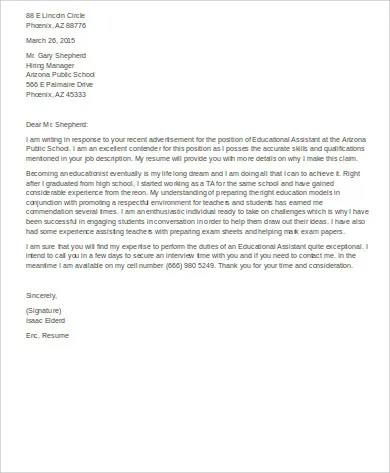
Below is an example of an education cover letter to illustrate how to apply the above guidelines. This example serves as a template that you can adapt to your specific situation and the job you are applying for. Review the sample to see how different components fit together. This will help you get the best results. The example is designed to illustrate the key elements of a compelling cover letter. Use it as a reference for structuring your own cover letter, and adapt it to highlight your unique skills, experiences, and teaching philosophy. Remember, tailoring is key to your success.