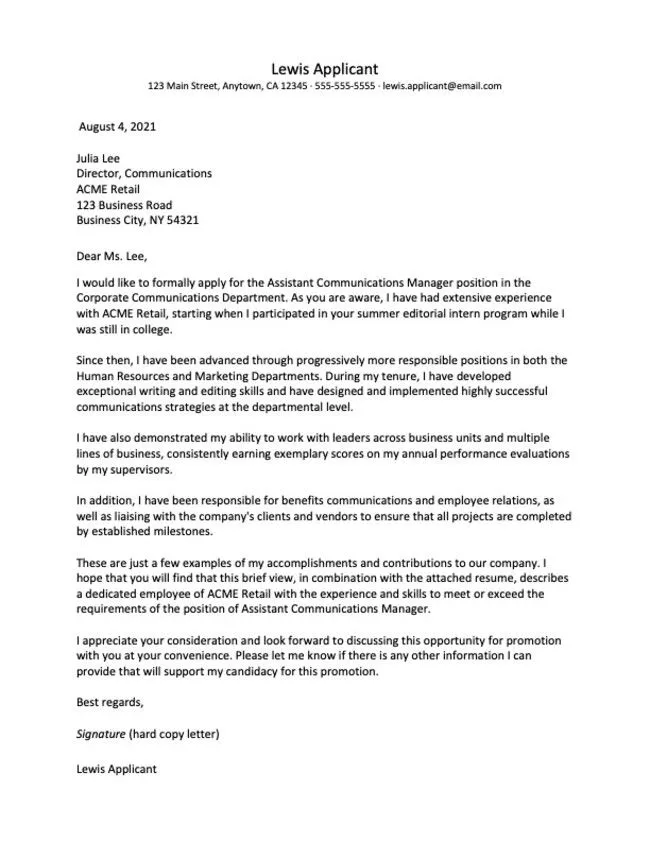
Understanding the Internal Position Cover Letter
An internal position cover letter is a crucial document when applying for a job within the company you already work for. It’s your opportunity to showcase your qualifications, express your interest in the new role, and demonstrate why you’re the best candidate. Unlike external applications, your existing relationship with the company offers a unique advantage. However, this also means your cover letter needs to be strategic and compelling to stand out from other internal candidates. It is vital to remember that you need to apply with the same level of professionalism as you would for an external opportunity, as this is your chance to make a lasting impression on the hiring managers and secure your desired position. Failing to do so may impact your chances of a successful transition.
Why an Internal Cover Letter is Crucial
An internal cover letter serves several key purposes. First, it allows you to formally express your interest in the position. Second, it provides you with the space to elaborate on your qualifications and skills, making a more detailed case than a resume alone. Third, it demonstrates your understanding of the company’s needs and how you can contribute. Finally, it can help you build relationships and maintain connections with those who are in a position to help you succeed. It is your chance to make the next step in your professional career. By addressing the hiring manager specifically, you personalize the letter to show your serious interest in the role.
Highlighting Your Achievements

One of the primary goals of an internal cover letter is to highlight your accomplishments. Focus on specific examples of how you’ve added value to the company. Quantify your achievements whenever possible using metrics like increased sales, improved efficiency, or reduced costs. Use the STAR method (Situation, Task, Action, Result) to structure your examples, providing context, detailing your actions, and emphasizing the positive outcomes. Be concise and clear, ensuring that your achievements align with the requirements of the internal position you are applying for. Remember that your goal is to make a compelling case for your capabilities and to show the hiring manager how your previous experience translates into success in the new role. Use the cover letter as the chance to shine.
Demonstrating Company Knowledge
In an internal cover letter, you can showcase your understanding of the company’s culture, values, and goals. This demonstrates your commitment to the organization and your readiness to contribute to its success. Mention specific projects, initiatives, or company-wide objectives you have supported or want to support. Reflect on how the new role aligns with the company’s strategic vision. Showing that you are up-to-date on the company’s recent achievements will make you stand out. Highlighting your knowledge helps the hiring manager understand that you’re not just applying for a job but are invested in the company’s long-term success. This level of insight makes you more desirable for the position.
Top 7 Tips for a Winning Internal Position Cover Letter
1. Tailor to the Specific Role

Customize your cover letter to match the job description. Analyze the key requirements and responsibilities of the new role. Highlight the skills and experiences that directly align with what the company is seeking. Use keywords from the job posting to show that you understand the position’s demands. Do not send a generic cover letter. This demonstrates your serious interest and attention to detail. The more effort you put into tailoring your letter, the better your chances of impressing the hiring manager.
2. Showcase Relevant Skills
Clearly articulate your skills, especially those that are directly relevant to the new position. Mention both hard skills (technical abilities) and soft skills (communication, leadership, etc.). Provide examples of how you have used these skills in previous roles to achieve positive outcomes. Consider creating a skills section within your cover letter to make it easy for the hiring manager to see your qualifications at a glance. Demonstrate your capabilities by providing relevant examples and evidence to back them up. Aligning your skills with the job requirements is crucial.
3. Emphasize Internal Experience
Leverage your existing internal experience to your advantage. Highlight any projects, departments, or teams you’ve worked with, especially those that relate to the new position. This shows that you’re familiar with the company’s processes, systems, and culture. Mention how your previous roles have prepared you for the new responsibilities. This is a major advantage over external candidates, who would need time to acclimate. By emphasizing your internal experience, you establish yourself as a valuable asset who can quickly contribute to the new role. This also provides a smooth transition from your previous position to the new one.
4. Quantify Your Accomplishments

Use numbers and data to demonstrate the impact of your work. Instead of saying you ‘improved customer satisfaction,’ state that you ‘increased customer satisfaction scores by 15%.’ Quantifying your accomplishments adds credibility to your claims and shows the tangible results you have achieved. Provide clear, measurable examples whenever possible to highlight your contributions and how you have helped the company. This will also create a very strong case, and the hiring managers will be able to see the positive impact you can have if they select you for the internal position. It will make a very strong case for your candidacy.
5. Express Enthusiasm for the Company
Convey your genuine enthusiasm for the company and the new role. Explain why you’re excited about the opportunity and how it aligns with your career goals. Show that you are committed to the company’s mission and values. Personalize your letter by mentioning specific aspects of the role or the company that excite you. Let the hiring manager see how passionate you are about continuing your career in the organization. Expressing enthusiasm makes your application more engaging and memorable, and the hiring manager will be able to see the passion that you have.
6. Address Any Weaknesses
If there are any potential gaps in your experience or skills, address them proactively. Acknowledge any areas where you may need to grow and express your willingness to learn. Frame any weaknesses as opportunities for development and show how you plan to overcome them. If you lack a specific skill, mention any training or courses you’re taking to address the gap. Being honest and proactive builds trust and demonstrates your self-awareness and commitment to personal and professional growth. You will show the hiring managers how you intend to make up for the shortcomings that you have, which makes you a more serious candidate.
7. Proofread Meticulously

Ensure your cover letter is free of grammatical errors, spelling mistakes, and typos. Proofread multiple times or have a colleague review it. Errors can undermine your credibility and give the impression that you lack attention to detail. Pay close attention to formatting and ensure that the letter is easy to read. A polished cover letter shows that you care about making a good impression and understand the importance of clear communication. By showing your work and correcting any mistakes, you are demonstrating that you are someone who pays close attention to detail and someone that the hiring manager can count on. You can also use automated tools to check your document for errors.
Structuring Your Internal Cover Letter
Header and Contact Information
Include your name, address, phone number, and email address. If possible, use the same contact information listed in your resume. Add the date and the hiring manager’s name and title. If you don’t know the hiring manager’s name, find out beforehand by checking the company’s website, LinkedIn, or internal communications. Addressing your cover letter to a specific person shows you have done your research and are serious about the position. Ensure your contact details are accurate and professional.
Opening Paragraph

Start by stating the position you are applying for and where you saw the job posting. Briefly express your enthusiasm for the opportunity and mention a key skill or experience that aligns with the role. This opening should immediately capture the reader’s attention and make them want to learn more. Be direct and to the point, setting the stage for the rest of your letter. It can also be a way to build connections with the hiring managers, and they will remember the letter.
Body Paragraphs
Use the body paragraphs to highlight your qualifications, skills, and achievements. Provide specific examples to support your claims, using the STAR method. Emphasize how your experience aligns with the job requirements and how you can contribute to the company’s success. Be concise, clear, and focused on the most relevant information. Organize your paragraphs logically to make it easy for the hiring manager to follow your narrative. Each paragraph should focus on a specific point, making it a more organized and readable cover letter. It should be easy to understand what you mean, and the hiring managers will understand your purpose in applying for the internal position.
Closing Paragraph
In your closing paragraph, summarize your key qualifications and reiterate your interest in the position. Thank the hiring manager for their time and consideration. Include a call to action, such as expressing your availability for an interview and indicating how you can be contacted. End with a professional closing such as ‘Sincerely’ or ‘Best regards,’ followed by your name. The closing paragraph should leave a lasting positive impression and motivate the hiring manager to contact you.
Internal Position Cover Letter Examples

Example Cover Letter for a Promotion
When applying for a promotion, emphasize your past accomplishments and how you have exceeded expectations in your current role. Highlight your leadership skills and your ability to take on new responsibilities. Demonstrate your understanding of the company’s strategic goals and how you can contribute to achieving them in the new position. Showcase your commitment to professional development and your willingness to take on new challenges. Provide specific examples of your impact on the team and the company as a whole. By demonstrating how you have been a successful employee and the potential you have, you are increasing your chances of securing the promotion.
Example Cover Letter for a Transfer
In a transfer, focus on how your skills and experience align with the new department’s needs. Explain your reasons for wanting to transfer and how it aligns with your career goals. Highlight any projects or experiences that have prepared you for this new role. Emphasize your adaptability and your ability to learn new skills quickly. Show your enthusiasm for the new department and your willingness to contribute to its success. Provide clear evidence of your potential and how you can be a valuable asset to the new department. If you can demonstrate how you can contribute, you have a very good chance of success.
Final Thoughts
Writing a strong internal position cover letter requires a strategic approach. By following these tips and examples, you can effectively showcase your qualifications, express your enthusiasm, and increase your chances of landing the job. Remember to tailor your letter to each specific role, highlight your accomplishments, demonstrate your company knowledge, and proofread meticulously. With a well-crafted cover letter, you can impress the hiring manager and take the next step in your career within your current company. By showcasing your skills and passion, you can make a very strong case for your abilities and land your dream job.