Cover Letter Example No Experience Why is it Needed?
A cover letter is your first introduction to a potential employer, serving as a crucial tool in the job application process. Even without prior professional experience, a well-crafted cover letter can significantly increase your chances of landing an interview. It provides an opportunity to showcase your skills, express your enthusiasm for the role, and demonstrate your understanding of the company. This guide provides a comprehensive cover letter example designed for individuals with no experience, offering practical tips and strategies to make your application stand out. A cover letter isn’t just a formality; it’s a powerful way to make a positive first impression and get noticed by hiring managers, even when you’re starting from scratch in your career. A cover letter provides context to your resume, explaining your career goals and why you’re a good fit for the company.
Cover Letter Structure for No Experience
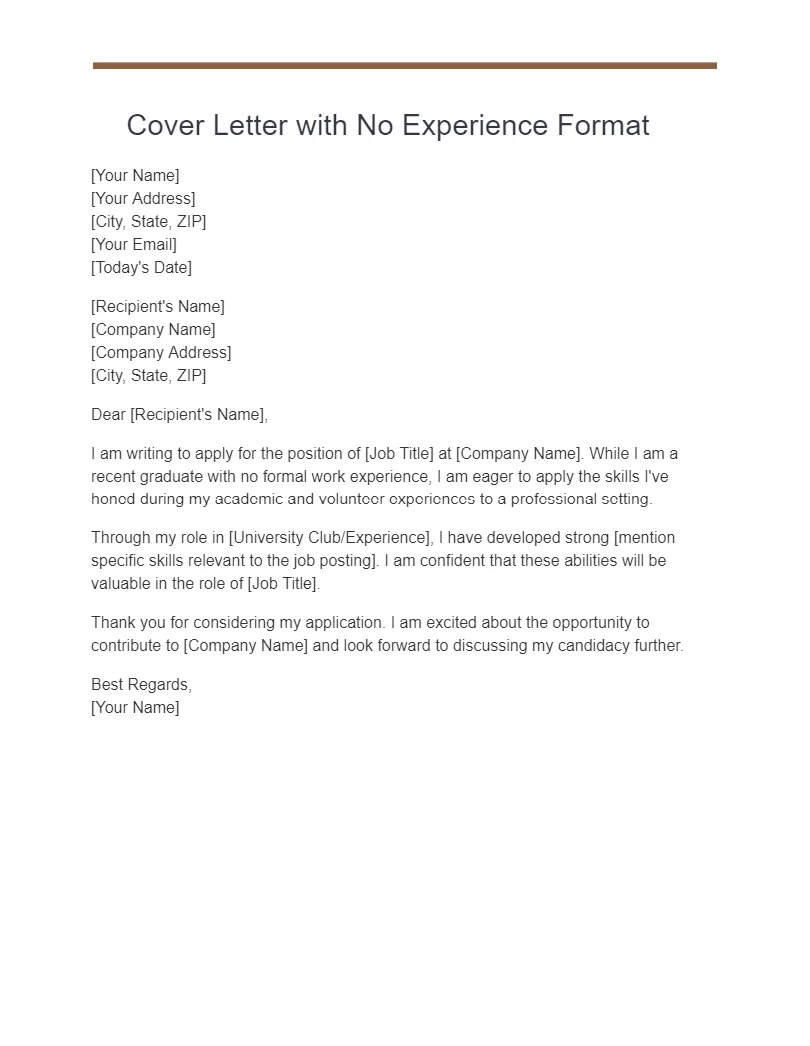
Structuring your cover letter correctly is vital. A clear, organized format helps the hiring manager quickly grasp your qualifications and enthusiasm. The following sections are essential for a compelling cover letter, especially if you lack direct work experience. Each section should be concise and targeted, reflecting your understanding of the job requirements and the company’s needs. A well-structured cover letter makes a positive impression and makes it easier for the hiring manager to evaluate your application. The following structure provides a solid foundation for showcasing your skills and potential even with no prior professional experience.
Header Information

The header sets the tone for professionalism. It includes your contact information and the recipient’s details. It must be correctly formatted and easy to find. Using a clean and professional font ensures readability, while consistent formatting maintains a polished look. Accuracy is paramount. The header confirms the recipient’s contact details, ensuring your application reaches the appropriate person. A well-formatted header demonstrates your attention to detail, an important quality for any job applicant. A good header is the first step to a professional cover letter.
Applicant’s Contact Info
Include your full name, address, phone number, and professional email address. Ensure your email address is appropriate; use a formal address rather than a casual one. Double-check all information for accuracy to avoid missed opportunities. Your contact information is the primary way the employer will reach out to you. Make sure it is easy to read and professional. Consider including a link to your LinkedIn profile if you have one. This offers the employer a quick way to learn more about your background.
Recipient’s Contact Info
If possible, find the hiring manager’s name and title. Address the letter to a specific person; this shows you’ve done your research and are genuinely interested in the position. If you can’t find a specific name, use the hiring manager’s title or the department name. Use a professional title such as Mr., Ms., or Dr. If you don’t know the specific person, researching the company website or LinkedIn can help you find the information. Tailoring the letter to the specific hiring manager makes your application more personalized and shows your effort.
The Salutation

The salutation is your initial greeting. Use ‘Dear [Hiring Manager’s Name]’ if you know it. If not, use a professional greeting like ‘Dear Hiring Manager’ or ‘Dear [Department Name] Hiring Team’. Avoid generic greetings like ‘To Whom It May Concern’, which can appear impersonal. The salutation sets the tone for the letter. Ensure your greeting is respectful and formal, reflecting your professionalism. A good salutation reflects that you have done your research. This small detail can set your cover letter apart from others.
Body Paragraph 1 Addressing the Job
In your first body paragraph, state the specific position you are applying for and how you found the job posting. Briefly explain why you are interested in the role and the company. Express your enthusiasm for the opportunity and highlight what attracts you to the position. Tailor this section to the specific job description; show you understand what the company is looking for. Your goal is to capture the reader’s attention right away. Make a clear statement about the role you are applying for. If the job was referred, mention that here.
Body Paragraph 2 Highlighting Skills
Even without experience, focus on transferable skills and how they align with the job requirements. Identify skills gained from academics, volunteer work, extracurricular activities, or personal projects. Use action verbs to describe your abilities and provide brief examples of how you’ve utilized these skills. Connect your skills to the requirements of the job description. For example, if the job requires teamwork, highlight how you demonstrated teamwork in a group project. The goal is to show potential, even without direct experience. This section is vital for demonstrating your suitability for the job.
Body Paragraph 3 Show Enthusiasm

This paragraph should reinforce your interest in the company and the position. Research the company’s mission, values, and recent activities to show your genuine interest. Describe how your skills and interests align with the company’s goals. Mention specific aspects of the company or role that appeal to you, demonstrating you’re not just applying for any job. Express your excitement about the possibility of contributing to the company’s success. End this section with a call to action, such as expressing your eagerness for an interview. Showing enthusiasm makes your application stand out.
The Closing
Conclude your cover letter with a professional closing such as ‘Sincerely’ or ‘Best regards’, followed by your full name. Reiterate your appreciation for the hiring manager’s time and consideration. Include a call to action by inviting the hiring manager to contact you. Thank them for considering your application. Proofread the entire letter to catch any errors. Your closing is the final impression you will leave on the hiring manager. A well-written closing reinforces your professionalism and leaves a positive impact.
Key Components to Include in Your Cover Letter
Certain key components will strengthen your cover letter, particularly when you have no professional experience. Highlighting transferable skills, showcasing your education, and demonstrating soft skills are all essential. The following sections provide more details on these components. By thoughtfully incorporating these elements, you create a compelling narrative that highlights your potential.
Highlighting Transferable Skills
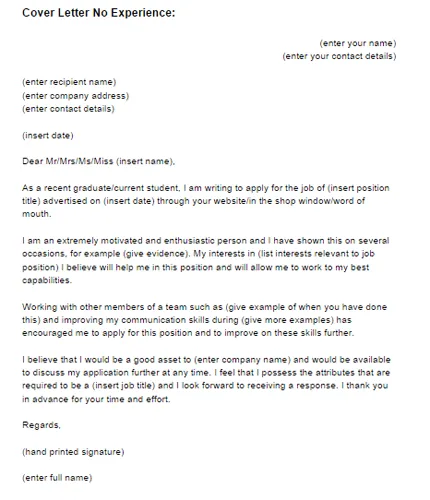
Identify skills gained from various experiences, such as problem-solving, communication, teamwork, leadership, time management, and organizational abilities. These skills are valuable across many roles. Provide specific examples that demonstrate how you have used these skills. For instance, if you have strong communication skills, describe a situation where you effectively communicated with a team or resolved a conflict. Explain how you used these skills to achieve positive results. Emphasizing transferable skills bridges the gap when you lack direct work experience.
Showcase Your Education
Detail your academic achievements, relevant coursework, and any projects or research that demonstrate your abilities. Highlight any specializations, honors, or awards received during your studies. Mention any relevant projects where you applied your skills, such as group projects, presentations, or research papers. This section provides insight into your knowledge and capabilities. Include your GPA if it is strong and list any relevant coursework. Tailor this section to the job requirements; emphasize courses or skills related to the position.
Demonstrate Your Soft Skills
Soft skills are essential for success in any role. Highlight your communication, interpersonal, problem-solving, and adaptability skills. Provide examples of how you have demonstrated these skills. If you have volunteered, describe how you worked with others. If you solved a problem, explain the situation, your actions, and the outcome. Demonstrate your ability to collaborate, communicate, and adapt to different situations. Soft skills show your potential to fit into the company culture. Focus on demonstrating your ability to get along with others, solve problems, and take initiative.
Quantify Your Achievements

Where possible, quantify your achievements to provide a tangible measure of your abilities. Even without direct work experience, find ways to quantify your accomplishments. If you participated in a project, indicate the results or impact of your contribution. Did you improve something by a certain percentage or contribute to a positive outcome? Numbers bring your skills to life and provide a concrete view of your capabilities. Quantifying your achievements makes them more impactful. Use numbers to make your achievements clear and memorable.
Tips for Writing a Strong Cover Letter
Creating a compelling cover letter requires attention to detail and strategic planning. The following tips help you improve your application and increase your chances of getting an interview. These best practices will allow you to create an effective cover letter.
Tailor Each Letter
Avoid using a generic cover letter for multiple applications. Customize each letter to the specific job and company. Research the company and the role thoroughly. Use keywords from the job description. Explain how your skills and experiences align with the specific requirements. Demonstrate that you understand the company’s values and mission. Tailoring your letter demonstrates that you have taken the time to understand the company. This effort increases your chance of getting noticed.
Keep it Concise

Keep your cover letter concise and easy to read. Aim for one page. Use clear and direct language, avoiding jargon or overly complex sentences. Focus on the most relevant information and avoid unnecessary details. Use bullet points and short paragraphs to make the information easily digestible. Keep your message clear and direct. Ensure your letter is easy to read and understand.
Proofread Carefully
Thoroughly proofread your cover letter for any grammatical errors, typos, or formatting inconsistencies. Errors can undermine your credibility. Use a grammar checker, and have someone else review your letter. Ensure the tone is professional, and all the details are accurate. Proofreading is essential; errors can make a negative impression. A well-proofread letter shows attention to detail.
Formatting and Design
Proper formatting and design enhance your cover letter’s readability and make it visually appealing. Use a clean and professional font, such as Times New Roman, Arial, or Calibri, with a font size of 11 or 12 points. Use consistent margins (1 inch on all sides). Use clear headings and bullet points to break up text and make it easy to scan. Ensure the layout is balanced and organized. A well-formatted cover letter is easier to read and more likely to be reviewed.