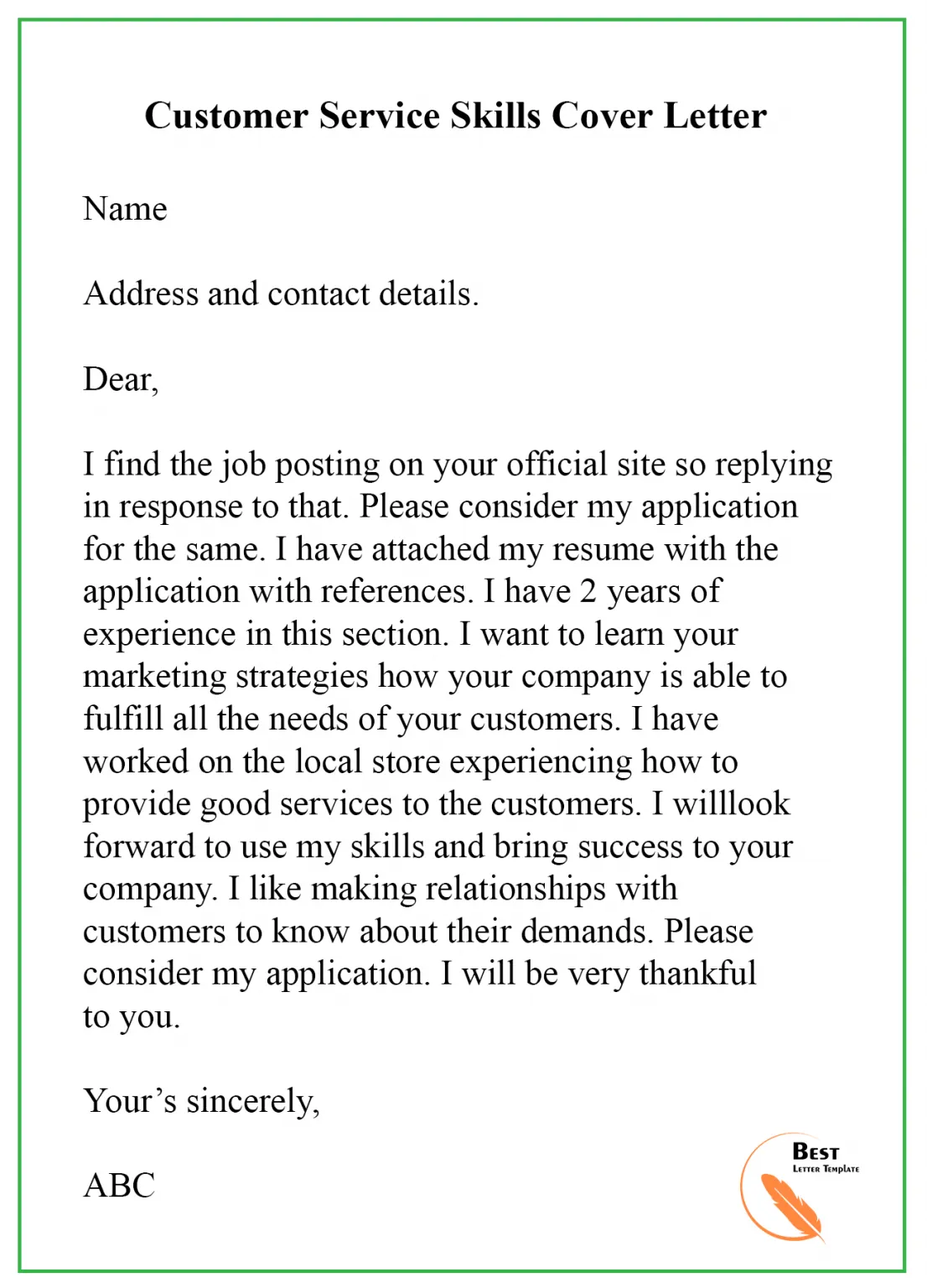
Crafting Your Customer Care Cover Letter
A customer care cover letter is your initial introduction to a potential employer, serving as a crucial tool in your job search arsenal. It’s an opportunity to showcase your skills, experience, and personality in a way that your resume alone cannot. A well-crafted cover letter can significantly increase your chances of landing an interview and ultimately, securing the job. This guide will walk you through creating a compelling customer care cover letter that grabs the attention of hiring managers and highlights your suitability for the role. We will explore what makes a good cover letter, how to tailor it, and what to include to make it stand out from the competition. Remember, this document is not just a formality; it’s a marketing tool designed to sell your abilities and make a positive impression.
Understanding the Customer Care Role
Before you start writing, it’s essential to grasp the core responsibilities and expectations of a customer care position. Customer care professionals are the primary point of contact for customers, addressing their inquiries, resolving issues, and ensuring overall satisfaction. They act as the voice of the company, striving to build positive relationships and maintain customer loyalty. Understanding this role will inform the language you use, the skills you emphasize, and the achievements you highlight in your cover letter. Familiarize yourself with the company’s specific customer service philosophy and values, as this knowledge will enable you to tailor your letter more effectively and demonstrate your alignment with their objectives.
Essential Skills for Customer Care Positions

Customer care roles demand a specific set of skills. Your cover letter should spotlight these, demonstrating your ability to excel in the position. Focus on communication (both written and verbal), active listening, problem-solving, empathy, and patience. Highlight your experience with CRM software, chat platforms, or any other tools used in customer service. Emphasize your ability to remain calm under pressure, handle difficult customers, and efficiently resolve issues. Any experience in conflict resolution, de-escalation techniques, or exceeding customer expectations should be noted. Demonstrating these skills convincingly will make you a more attractive candidate.
Highlighting Your Achievements
Your cover letter should go beyond simply listing your responsibilities; it needs to showcase your achievements. Instead of stating you ‘handled customer inquiries,’ describe how you ‘reduced customer complaint resolution time by 15%.’ This approach provides tangible evidence of your capabilities and demonstrates your value. Use the STAR method (Situation, Task, Action, Result) to structure your examples. This will help you present your accomplishments in a clear, concise, and compelling manner. Focus on quantifiable results whenever possible, illustrating the positive impact you made in previous roles. Always tailor your achievements to match the specific requirements of the job description.
Quantifying Your Accomplishments
Numbers speak volumes. Instead of saying you improved customer satisfaction, mention you ‘increased customer satisfaction scores by 20% through proactive problem-solving and personalized support.’ Use metrics such as the number of customers you assisted daily, the average resolution time for issues, or the percentage of positive customer feedback you received. Quantifying your achievements provides concrete evidence of your abilities, making your cover letter much more impactful. Think about what metrics your previous employers used to evaluate your performance and incorporate those numbers into your letter. This level of detail sets you apart from other applicants who might only use vague statements.
Showcasing Your Problem-Solving Abilities

Customer care roles require strong problem-solving skills. Illustrate your ability to identify issues, analyze situations, and implement effective solutions. Describe specific instances where you went above and beyond to resolve a customer’s problem, emphasizing the positive outcome. Did you develop a new process to improve efficiency? Did you successfully handle a complex complaint that resulted in retaining a valuable customer? Provide concrete examples that demonstrate your resourcefulness, critical thinking, and ability to find creative solutions. This shows you can adapt to different scenarios and remain calm under pressure.
Tailoring Your Cover Letter
A generic cover letter is unlikely to impress. Customizing your letter for each application is crucial. This demonstrates your genuine interest in the specific company and role. Start by thoroughly reviewing the job description and identifying the key skills and qualifications they’re seeking. Then, tailor your letter to address those requirements directly, using the same keywords and phrases where appropriate. This helps the hiring manager quickly see how your skills align with the position. Additionally, research the company’s values, mission, and culture. Show how your experience and personality align with their brand.
Researching the Company
Before writing your cover letter, dedicate time to researching the company. Visit their website, review their social media profiles, and read any recent news articles or press releases. Understand their products or services, their target audience, and their overall business strategy. This knowledge will help you personalize your letter and demonstrate your genuine interest in the opportunity. You can then weave specific details about the company into your letter, such as mentioning a product you admire or expressing your alignment with their values. This level of effort signals that you’re not just sending out a generic application, but that you’re genuinely invested in joining their team.
Matching Skills to Job Requirements

Carefully analyze the job description and identify the required skills, experience, and qualifications. Highlight the relevant skills and experiences from your background that directly address those requirements. Use the same language as the job posting to show you understand what the employer is looking for. Don’t just list your skills; provide examples of how you’ve used them to achieve positive results. This targeted approach ensures that your cover letter effectively communicates your qualifications and increases your chances of getting an interview. If the job description emphasizes a particular skill, make sure to feature it prominently and provide a compelling example of your proficiency.
Formatting Your Cover Letter for Impact
The format of your cover letter is just as important as its content. A well-formatted letter is easy to read and visually appealing. Use a professional font like Arial or Times New Roman, with a font size between 10 and 12 points. Keep your letter concise, ideally one page. Use clear headings, bullet points, and ample white space to break up large blocks of text. Ensure your letter has a professional layout, including your contact information, the date, and the recipient’s information. Pay attention to the overall appearance of your letter; it should look polished and reflect attention to detail.
Structuring Your Cover Letter Effectively
A well-structured cover letter follows a logical flow. Begin with a strong opening paragraph that grabs the reader’s attention and states the purpose of your letter. The body of your letter should include paragraphs highlighting your key skills, achievements, and experience, with specific examples to support your claims. In the final paragraph, reiterate your interest in the position and express your enthusiasm for the opportunity. Include a clear call to action, such as requesting an interview. Maintain a consistent tone throughout the letter and ensure all sections connect seamlessly. This flow makes your letter easy to follow and keeps the reader engaged.
Proofreading and Editing

Before submitting your cover letter, proofread it carefully for any grammatical errors, typos, or inconsistencies. Errors can undermine your credibility and make a negative impression on the hiring manager. Use a grammar checker and spell-check tool, but don’t rely on them entirely. Read the letter aloud to catch any awkward phrasing or unclear sentences. Ask a friend or family member to review your letter for a fresh perspective. Make sure your contact information is correct and up-to-date. Ensure that the letter is error-free to leave a professional impression.
Call to Action and Closing
Your cover letter should conclude with a strong call to action. Clearly state your interest in the position and express your eagerness to learn more about the opportunity. Thank the hiring manager for their time and consideration. Provide your contact information again, and specify the best way to reach you. End with a professional closing such as ‘Sincerely’ or ‘Best regards,’ followed by your name. A well-crafted closing paragraph leaves a lasting positive impression and encourages the hiring manager to take the next step.