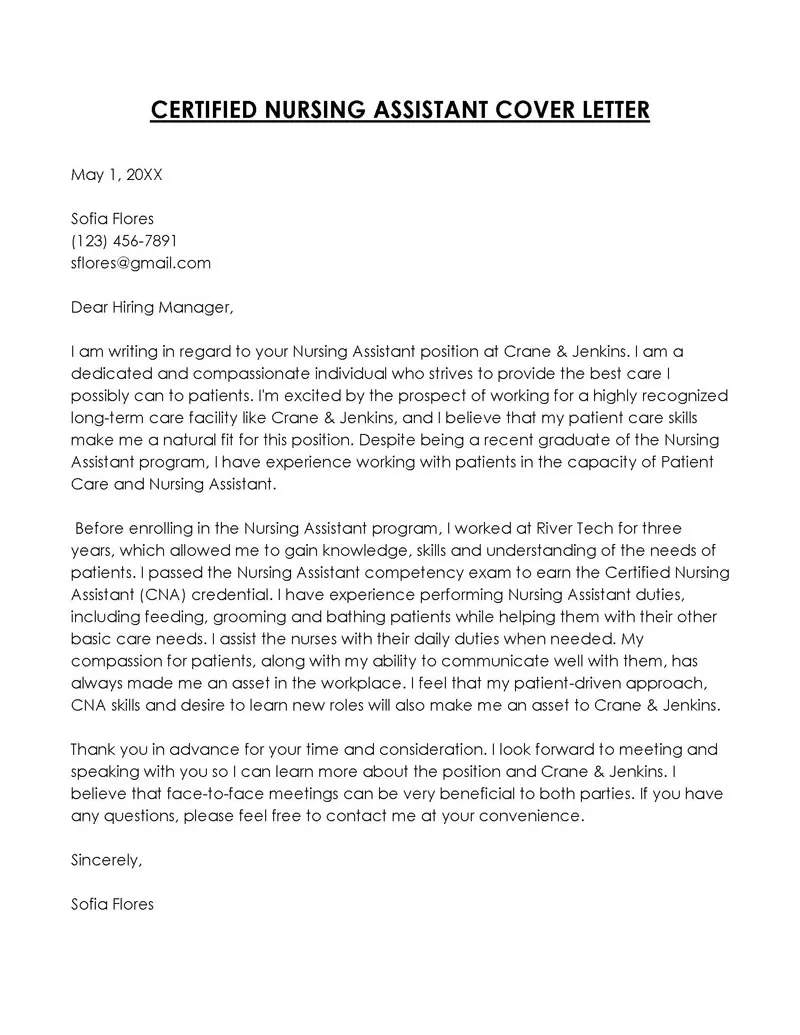
Crafting a Winning CNA Cover Letter
A well-crafted CNA cover letter is your first opportunity to make a positive impression on a potential employer. It serves as a crucial introduction, allowing you to highlight your skills, experience, and passion for caregiving. This guide provides secrets and tips to help you create a compelling cover letter that grabs the attention of hiring managers and increases your chances of landing a job. Remember, this is not just about listing qualifications; it’s about showcasing your personality and demonstrating why you’re the perfect fit for their team. The key is to stand out from other applicants and make a lasting impression.
Understanding the Purpose of a CNA Cover Letter
The primary purpose of a CNA cover letter is to introduce yourself and express your interest in a specific CNA position. It’s your chance to go beyond the resume and provide a narrative that showcases your personality, care philosophy, and unique value proposition. Unlike a resume, which is a factual summary of your experience, a cover letter allows you to explain why you’re interested in the role, why you’re a good fit, and what you can bring to the organization. It’s a great opportunity to communicate your enthusiasm for the job and demonstrate that you’ve done your research on the healthcare facility.
Highlighting Your Skills and Qualifications

Your cover letter should emphasize the skills and qualifications that align with the job description. The most effective cover letters strategically highlight relevant skills and experiences. Tailor your letter to each job by carefully reviewing the requirements listed in the job posting. Focus on the skills and qualifications the employer is seeking and provide specific examples that demonstrate your abilities. Don’t just list your skills; show how you’ve applied them to achieve positive outcomes in previous roles. This approach not only makes your letter more compelling but also demonstrates that you can contribute effectively.
Key Skills for a CNA
CNAs require a diverse skill set to provide quality patient care. Your cover letter should highlight skills such as communication, empathy, patience, and attention to detail. Other essential skills include the ability to assist patients with daily living activities, monitor vital signs, and provide emotional support. Emphasize any experience with specific patient populations, such as those with Alzheimer’s or other chronic conditions. Remember to use concrete examples to illustrate how you’ve successfully applied these skills in past roles. For instance, describe how you handled a difficult patient situation, or how you effectively communicated with a patient’s family.
Certifications and Licenses
Always mention your CNA certification and any other relevant licenses or certifications. Be sure to specify your certification’s issuing state and expiration date. If you have specialized training or certifications, such as BLS or CPR, list these as well. Including these details helps employers quickly verify your credentials. Moreover, listing any additional training or certifications related to patient care demonstrates a commitment to continuous professional development, which can set you apart from other candidates. Ensure your certifications are current and valid to demonstrate your compliance with industry standards.
Demonstrating Your Passion for Caregiving

Showcasing your genuine passion for caregiving is critical. Share a brief anecdote or personal statement that conveys your commitment to providing compassionate and patient-centered care. Explain what motivates you to work in healthcare and how you contribute to creating a positive environment for patients. Your enthusiasm can be a significant differentiator. When you write, try to convey your passion for caregiving by describing situations in which you’ve gone the extra mile for patients. Personal stories can create a connection with the reader. Expressing your values and how they align with the organization’s mission can further enhance your application.
Showcasing Relevant Experience
Provide specific examples of your relevant experience in previous healthcare roles. Detail your responsibilities and accomplishments, using quantifiable results whenever possible. For example, instead of saying you ‘assisted patients with daily activities,’ you could say you ‘assisted an average of 10 patients daily with personal hygiene, mobility, and meal preparation.’ This level of detail provides a clear picture of your capabilities and experience. Furthermore, highlighting any experience in specific healthcare settings, such as hospitals, nursing homes, or assisted living facilities, can be advantageous. Tailor your examples to the specific needs and requirements of the job.
Structuring Your CNA Cover Letter
A well-structured cover letter is easy to read and highlights your qualifications effectively. A standard format typically includes a header, greeting, body paragraphs, closing, and signature. Each section plays a vital role in conveying your message and making a strong impression. The organization and clarity of your letter are just as important as the content. Make sure your cover letter is well-organized, with clear sections, concise language, and a professional tone. Adhering to a standard format will make it easier for the hiring manager to quickly assess your qualifications and determine if you meet their needs.
The Header

The header should include your contact information, such as your name, address, phone number, and email address. It’s also good practice to include the date and the employer’s address. Make sure your contact information is accurate and up-to-date. This allows the hiring manager to easily contact you. A professional header sets the tone for your letter and ensures that your contact information is readily available. Double-check all details to avoid errors that could cause the employer difficulty in contacting you.
The Greeting
Address the hiring manager by name, if possible. If you don’t know the name, use a professional greeting, such as ‘Dear Hiring Manager.’ Avoid generic greetings, such as ‘To Whom It May Concern,’ as they can make your letter appear impersonal. Researching the company beforehand can help you find the hiring manager’s name. Personalizing your greeting shows that you’ve put in the effort to learn about the company and demonstrate your interest in the specific role. This can have a very positive impact.
The Body Paragraphs
The body of your cover letter is the core of your message. It should consist of three or four paragraphs. Each paragraph has a distinct purpose, from introducing yourself to highlighting your skills and explaining why you’re a good fit. The body paragraphs provide you the opportunity to elaborate on your resume and provide context. Each paragraph should have a clear focus, and they should flow logically from one to the next. This structure allows you to present your qualifications, experience, and enthusiasm concisely and effectively.
Paragraph 1 Your Introduction and Enthusiasm

In the first paragraph, introduce yourself and state the position you’re applying for. Briefly express your interest in the role and the healthcare facility. This is your opportunity to capture the reader’s attention and set the tone for the rest of your letter. Mention where you found the job posting and why you are excited about the opportunity. This section is the hook; it’s what grabs the attention of the hiring manager. Make your introduction concise, enthusiastic, and focused on your interest in the role.
Paragraph 2 Highlighting Skills and Experience
In the second paragraph, highlight your key skills, qualifications, and relevant experience. Use specific examples to demonstrate your abilities and achievements. Tailor this section to the requirements listed in the job description, ensuring you address each point. Quantify your accomplishments whenever possible. Instead of saying you’re ‘good at communication,’ say that you ’effectively communicated with patients and their families to ensure their needs were met, resulting in a 15% increase in patient satisfaction.’ Use concrete examples to show how you applied your skills and delivered positive results.
Paragraph 3 Why You’re a Good Fit
In the third paragraph, explain why you’re a good fit for the role and the organization. Express your interest in the healthcare facility’s mission and values, and how your personal values align with theirs. Discuss your career goals and how the position can help you achieve them. Demonstrate that you’ve researched the company and understand their goals. Show them how your skills and experience can benefit their patients and improve their team. It shows that you are considering more than just a job.
The Closing

Conclude your cover letter with a strong closing paragraph. Reiterate your interest in the position and thank the hiring manager for their time and consideration. Express your eagerness to discuss your qualifications further in an interview. Keep the closing brief, professional, and confident. A strong conclusion reinforces your key message and leaves a positive final impression. Make sure to maintain a tone of enthusiasm, as well as your eagerness to proceed.
The Signature
End your cover letter with a professional closing, such as ‘Sincerely,’ or ‘Respectfully,’ followed by your typed name. If you are submitting a printed letter, leave space for your handwritten signature above your typed name. A professional signature reinforces your professionalism and commitment to the position. If sending the application electronically, your typed name is sufficient. Ensure your signature is clear and easy to read and that your printed name matches the name on your resume and application.
Formatting and Presentation Tips
The formatting of your cover letter is critical for readability and professionalism. Use a standard font, such as Times New Roman or Arial, in a 10-12 point size. Maintain a clean and easy-to-read layout with adequate spacing. Your cover letter should be easy to scan. Use clear headings and bullet points to highlight key information. Ensure the letter is free of any unnecessary graphics or formatting, and be consistent throughout your document. Well-formatted letters leave a positive impression and make it easier for the hiring manager to read and understand your qualifications.
Proofreading and Editing
Proofreading your cover letter is essential. Carefully check for any grammatical errors, typos, and punctuation mistakes. Use a grammar checker tool, and have someone else review your letter as well. A mistake-free cover letter demonstrates your attention to detail and professionalism. Thorough proofreading assures your qualifications are easily and accurately understood. Make sure your cover letter represents your best work, showing that you have put in the time and care to make sure it stands out.
Using Action Verbs to Impress
Using action verbs to describe your accomplishments and responsibilities makes your cover letter more dynamic and engaging. Action verbs bring your achievements to life, demonstrating what you can do for the potential employer. Start each bullet point or sentence describing your experience with a strong action verb, such as ‘assisted,’ ‘managed,’ ‘coordinated,’ ‘implemented,’ or ‘improved.’ This helps employers understand your skills and experience more quickly. Be specific and use verbs that are relevant to the job description.
Common Mistakes to Avoid in Your CNA Cover Letter
Avoiding common mistakes will significantly increase the effectiveness of your cover letter. These errors can detract from your application and make it less likely you will be called for an interview. Paying attention to these details can help you present yourself as a polished candidate. It demonstrates that you are detail-oriented and committed to delivering high-quality care.
Generic and Vague Language
Avoid generic language and vague statements in your cover letter. Generic phrases fail to capture the reader’s attention. Instead, use specific examples and quantifiable results to demonstrate your skills and accomplishments. Show, don’t tell. Use action verbs and avoid clichés to make your cover letter more compelling. Demonstrating your achievements in this way makes your letter more effective and memorable, and will impress the hiring manager.
Typos and Grammatical Errors
Typos and grammatical errors can damage your credibility and make you appear unprofessional. Always proofread your cover letter carefully, and use a grammar checker. Having a second pair of eyes review your letter can also help catch any mistakes you may have missed. Errors can send the wrong message about your attention to detail and commitment to quality. Make sure you carefully review your work and use the tools available to catch any problems.
Ignoring the Job Description
Ignoring the job description is a common mistake. Tailor your cover letter to the specific requirements and qualifications listed in the job posting. Highlighting skills and experience that align with the job description demonstrates that you have the qualifications the employer is looking for. Show the employer that you’ve taken the time to review their needs and adapt your application to address them. Customize your letter to each job, as this demonstrates a genuine interest and effort in securing the position.
Customizing Your CNA Cover Letter
Customizing your cover letter is essential for increasing your chances of landing an interview. A generic cover letter can make you look like you’re sending out the same application to every job. Tailor your cover letter to the specific role and organization by carefully reviewing the job description, and demonstrating an understanding of the company’s mission and values. Customization showcases your interest in the position and highlights that you have taken the time to understand what the employer is looking for. This can improve your chances.
Tailoring to the Specific Job
Always tailor your cover letter to the specific job you’re applying for. Review the job description carefully and highlight the skills, qualifications, and experience that align with the requirements. Use keywords from the job description in your cover letter to demonstrate that you’re a good match for the position. Doing so shows that you meet the job’s requirements, and provides the hiring manager with the relevant information they need to make a decision. Tailoring your application to each job increases the likelihood of getting an interview.
Researching the Employer
Researching the employer is a critical step in customizing your cover letter. Visit the company’s website, read its mission statement, and learn about its values. Mentioning specific aspects of the organization that resonate with you shows that you are genuinely interested in working there. Understanding the organization’s culture and needs will help you tailor your cover letter and demonstrate that you are a good fit. Showing you have done your research helps create a positive first impression.
CNA Cover Letter Examples for Inspiration
Reviewing sample CNA cover letters can provide valuable inspiration and guidance. These examples offer insight into how to effectively structure, format, and write your cover letter. Make sure to adapt the examples to your specific experiences and the job you are applying for. Cover letter examples can help you understand the best way to format your letter and to see what other candidates have done. Using these examples can inspire you to craft your own, unique cover letter.
Sample Cover Letter 1
This section provides a sample cover letter, showcasing a well-formatted and compelling application. It includes an example of a strong introduction, highlighting key skills and experience. Remember to adapt this sample to your own qualifications and the specific job requirements. This will provide you with an example of the kind of language and structure that you might consider when writing your own cover letter. This can be a good starting point.
Sample Cover Letter 2
Another sample cover letter is provided, showing how to tailor the letter to the employer’s mission and values. It highlights a candidate’s passion for caregiving. Use this as a guide to create a personalized cover letter. See the type of language used and use it to guide you in crafting your own. This demonstrates your understanding of the organization and its values. Be sure to personalize the example to your own skills and qualifications.
Tips for Sending Your Cover Letter
When sending your cover letter, pay attention to the format and method of submission. If submitting electronically, save your cover letter as a PDF to preserve the formatting. Always follow the application instructions provided by the employer. Ensure your cover letter is easy to read and that it is well-formatted. This ensures that the hiring manager can easily read and understand your application. Proper format and submission shows that you take the time to follow instructions, which demonstrates your attention to detail.
Following Up
After submitting your cover letter and resume, follow up with the hiring manager within a reasonable timeframe, typically one to two weeks after the application deadline. A polite follow-up email or phone call can demonstrate your continued interest and help you stand out. Be sure to thank the hiring manager for their time and reiterate your enthusiasm for the position. Following up demonstrates your initiative and your continued interest in the position. It helps you stand out from the crowd.
Key Takeaways for a Successful CNA Cover Letter
Crafting a successful CNA cover letter involves highlighting your skills, experience, and passion for caregiving. Tailor your letter to each job, proofread carefully, and demonstrate your understanding of the organization. Following these tips can help you create a cover letter that grabs the attention of hiring managers. It will increase your chances of securing an interview and ultimately landing the job. Always remember that your cover letter is your opportunity to make a memorable first impression and showcase why you’re the best candidate for the role.