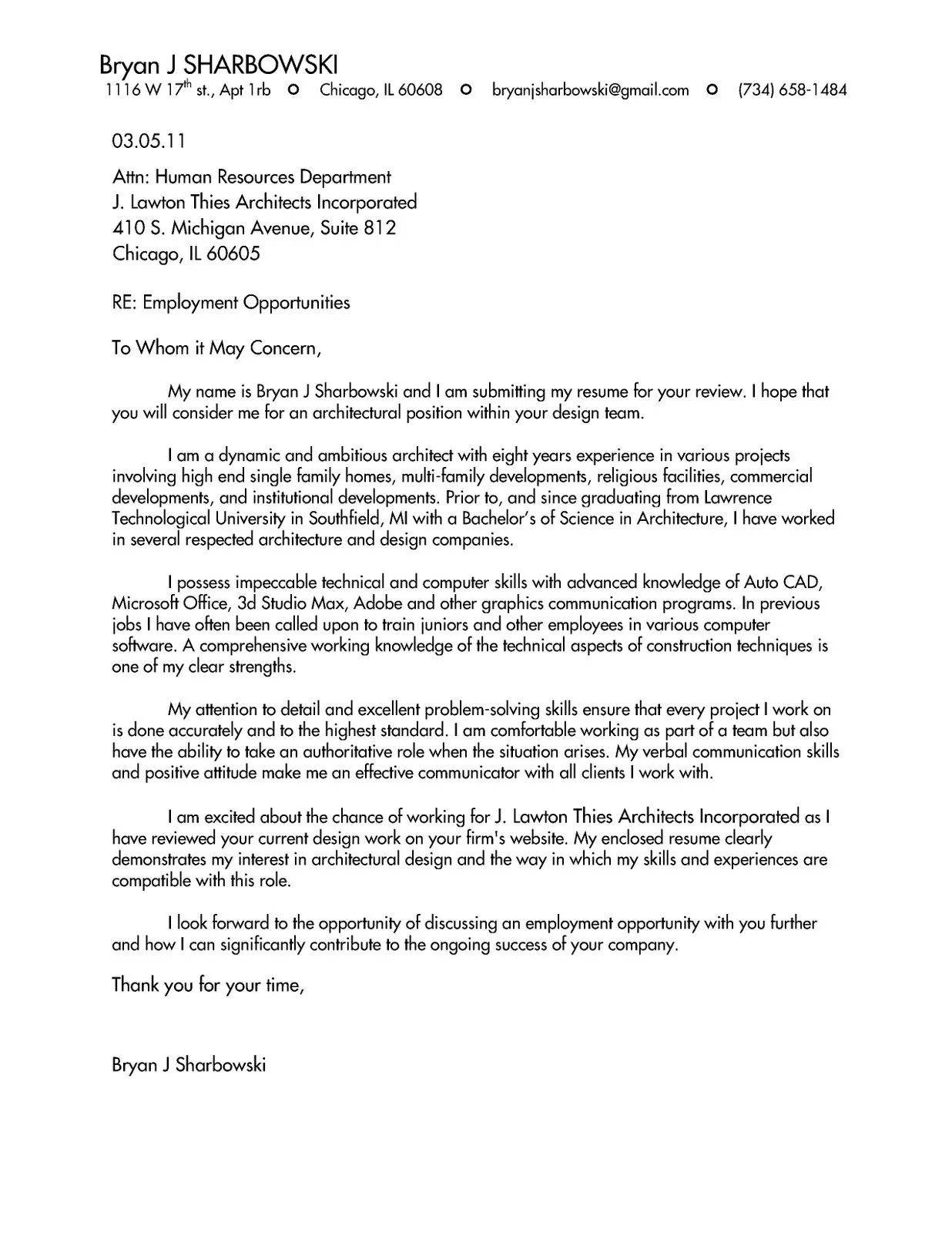
Why You Need an Architect Cover Letter
In the competitive field of architecture, a well-crafted cover letter is not just a formality; it’s a crucial tool for securing your dream job. It serves as your first impression, providing an opportunity to go beyond the confines of your resume and demonstrate your personality, passion, and specific skills relevant to the role. A strong cover letter can set you apart from other candidates, showcasing your unique value proposition and compelling employers to delve deeper into your qualifications. It’s your chance to tell a story, to explain your aspirations, and to connect your experience with the needs of the hiring company. This is particularly true when applying for jobs where architectural design is highly valued and the ability to communicate and connect with clients is essential to success.
Understanding the Purpose
The primary purpose of an architect cover letter is to introduce yourself, highlight your relevant skills and experience, and express your enthusiasm for the specific position and company. It’s an opportunity to elaborate on aspects of your resume that might require further explanation. Think of it as a narrative that complements your resume. This letter provides context, demonstrates your understanding of the role, and showcases your alignment with the company’s values and goals. Use it to explain why you are a good fit for a particular position, how your unique capabilities can benefit the firm, and your long-term career goals, making it clear why you want to contribute to their projects. A well-written cover letter directly addresses the job description and convinces the hiring manager that you possess the necessary skills and experience.
Highlighting Your Skills and Experience

Your cover letter is a prime opportunity to showcase the skills and experience that make you an ideal candidate. Focus on the achievements and projects that best align with the job requirements, using specific examples to illustrate your capabilities. For instance, if the job description emphasizes proficiency in AutoCAD, provide examples of projects where you successfully utilized this skill, highlighting any challenges you overcame and the positive outcomes achieved. Quantify your accomplishments whenever possible, such as the size or scope of projects managed, the number of team members supervised, or the efficiency gains achieved through design improvements. Emphasize any specialized knowledge, software proficiency, or design expertise you possess that directly relates to the role, positioning yourself as a valuable asset to the team.
Key Components of an Architect Cover Letter
A compelling architect cover letter includes several key components designed to grab the reader’s attention and effectively communicate your qualifications. These elements, when combined, create a professional and persuasive document that enhances your chances of landing an interview. Mastering these basics is key to making a favorable first impression on prospective employers and advancing your career. Here’s a breakdown of the essential parts, ensuring your letter delivers a strong message.
Contact Information
Start with your contact information at the top of the letter, including your name, address, phone number, and professional email address. Ensure this information is accurate and up-to-date. This allows the hiring manager to easily contact you if they are interested in your qualifications. Make sure the email address is professional and appropriate for the architecture field.
Greeting

Address the hiring manager by name if possible. Research the company to find the name of the hiring manager or the person in charge of recruitment. Using a specific name shows you’ve taken the time to personalize your cover letter, which is important. If you cannot find a name, a general greeting like “Dear Hiring Manager” is acceptable. Avoid generic salutations such as “To Whom It May Concern”.
Body Paragraphs Emphasizing Skills
The main body of the letter should highlight your skills and experience. Tailor each paragraph to fit the specific job description. Briefly describe your most relevant skills and accomplishments, providing specific examples that demonstrate your capabilities. Focus on the skills and experience that the company values most, highlighting any projects that demonstrate your expertise. Use strong action verbs and quantify your achievements whenever possible to make your accomplishments more impactful. Explain how you have a deep understanding of architectural designs and the ability to execute these designs.
Showcasing Your Portfolio and Projects
A key aspect of any architect cover letter is to showcase your portfolio. Mention specific projects from your portfolio that are relevant to the job you are applying for. Briefly describe the scope and your role in these projects. If possible, include a link to your online portfolio. If your portfolio is in a PDF, state this and explain where they can view it, especially if your online portfolio is not directly accessible. Highlighting specific projects demonstrates your expertise and gives the hiring manager a tangible view of your work.
Call to Action

Conclude your cover letter with a call to action. Express your interest in an interview and state how you can be reached. Thank the hiring manager for their time and consideration. This final step encourages the hiring manager to respond and move forward with your application, creating a positive closing statement.
Formatting and Design Best Practices
The formatting and design of your architect cover letter are critical in presenting a professional image and making a positive impression. A well-formatted letter demonstrates attention to detail, which is essential in architecture. Here are several formatting and design techniques you can use to ensure your cover letter stands out for the right reasons, ensuring easy readability, and showcasing your professionalism.
Choosing the Right Font and Layout
Choose a professional, easy-to-read font such as Times New Roman, Arial, or Calibri. Maintain a consistent font size throughout the document, typically between 10 and 12 points. Use a clear layout with ample white space to avoid a cluttered appearance. Use left-justified text for readability and avoid excessive use of italics or bolding, which can distract the reader. Keep your paragraphs concise and use bullet points to highlight key skills and achievements. Ensure the layout reflects architectural design standards and is visually appealing, providing a positive first impression of your design sensibility.
Proofreading and Editing

Proofreading and editing are essential to ensure your cover letter is polished and error-free. Carefully review your letter for any typos, grammatical errors, and inconsistencies. Always use a spell-checker and grammar checker, but don’t solely rely on these tools; read your letter multiple times. It’s helpful to have a friend, colleague, or career counselor review your letter for feedback. A well-proofread cover letter demonstrates professionalism and attention to detail, characteristics highly valued in the architectural field.
Tailoring Your Cover Letter for Each Application
One size does not fit all when it comes to architect cover letters. Tailoring your letter to each specific job application is critical for demonstrating your genuine interest and suitability for the role. Generic cover letters are often dismissed, so it’s crucial to personalize your letter based on the requirements of the job description and the company’s values. Customization reflects your understanding of the firm’s specific needs and your ability to align your skills and experience accordingly. This approach is the most effective way to make a strong impression and significantly increase your chances of getting noticed.
Researching the Company
Before you write your cover letter, research the company thoroughly. Visit their website, review their projects, and understand their design philosophy and values. Find out about their current projects and any recent awards or recognition they’ve received. This information will help you tailor your letter to match the company’s specific needs and demonstrate your knowledge of their work. Showing this level of familiarity demonstrates initiative and shows your genuine interest in working for them.
Customizing Your Letter

Use the information you gathered about the company and job requirements to customize your cover letter. Highlight skills and experiences that directly align with the job description. Provide specific examples of your previous work that match the company’s projects. Mention how you are familiar with their work and how your skills could contribute to their team. Show how you’ve aligned your career to the company’s goals, and demonstrate how your approach to design aligns with their methods, making a strong impression that you understand the firm’s objectives and goals.
Common Mistakes to Avoid
Avoiding common mistakes in your architect cover letter can significantly improve your chances of getting an interview. Many applicants make errors that can damage their chances. Be aware of these pitfalls to make sure you give the best impression possible. Here are some typical errors to avoid while crafting your cover letter for optimal impact, and a few tips to ensure your application stands out for all the right reasons.
Generic Language and Lack of Specificity
One of the most common mistakes is using generic language that could apply to any job. Avoid vague statements and instead provide concrete examples of your skills and accomplishments. Instead of saying “I am a skilled architect,” provide specific examples of your design projects or the skills you used. Use specific details that highlight how you contributed to previous projects. Being specific makes your letter much more compelling.
Typos and Grammatical Errors

Typos and grammatical errors are a major turn-off. They can be a sign of carelessness and lack of attention to detail. Always proofread your cover letter carefully, using spell-check and grammar-check tools. Consider having a friend or mentor review your letter to catch any errors you might have missed. A polished and error-free cover letter demonstrates professionalism and attention to detail, essential qualities in architecture.
The Importance of Following Up
After submitting your architect cover letter and resume, following up demonstrates your interest in the position. Within a week or two of submitting your application, send a brief email or make a phone call to the hiring manager to reiterate your interest. Thank the hiring manager for their time and confirm they have received your application. This shows your persistence and dedication. If you haven’t heard back within a reasonable time, a follow-up can help you stay at the top of the list.