
What is an Adjunct Professor Cover Letter
An Adjunct Professor cover letter is a crucial document that accompanies your resume when applying for a part-time teaching position at a college or university. It serves as your initial introduction to the hiring committee, providing an opportunity to showcase your qualifications, enthusiasm, and suitability for the role. Unlike a resume, which presents a factual overview of your experience, a cover letter allows you to highlight your passion for teaching, explain how your skills align with the specific job requirements, and articulate why you are the ideal candidate. A well-crafted cover letter can significantly increase your chances of securing an interview and ultimately landing the adjunct professor position.
Importance of a Strong Cover Letter
The importance of a strong cover letter cannot be overstated. In a competitive job market, where numerous applicants may possess similar qualifications, your cover letter can set you apart from the crowd. It provides a platform to demonstrate your unique value proposition and persuade the hiring committee that you are the best fit for the position. A compelling cover letter showcases your personality, writing skills, and genuine interest in the institution and the specific teaching role. By effectively communicating your strengths and aligning them with the needs of the department, you can make a lasting impression and increase your chances of being selected for an interview. A poorly written or generic cover letter, on the other hand, may lead to your application being overlooked, even if you possess excellent qualifications.
Key Components of an Adjunct Professor Cover Letter

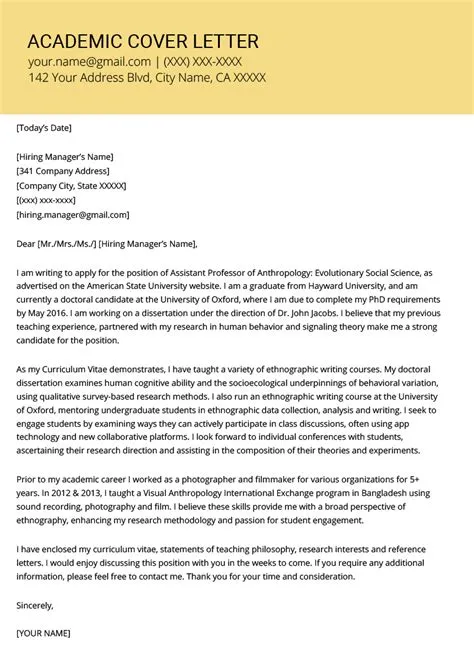
A well-structured cover letter should include several key components to effectively communicate your qualifications and enthusiasm. Adhering to a standard format ensures professionalism and clarity. Each section plays a vital role in presenting a comprehensive overview of your suitability for the role, from the initial contact information to the concluding call to action. Properly addressing each section is crucial for making a positive impression. This structured approach will help you create a polished and persuasive cover letter that highlights your strengths and sets you apart from other applicants.
Contact Information
At the top of your cover letter, include your full name, address, phone number, and professional email address. Ensure your email address is professional and appropriate for academic correspondence. This information allows the hiring committee to easily contact you. Double-check for accuracy to avoid any delays in communication. Presenting your contact information clearly and concisely ensures that you are easily reachable and presents a professional image.
Date
Below your contact information, include the date on which you are submitting the cover letter. This provides a reference point for the hiring committee and demonstrates that your application is current. Formatting the date correctly (e.g., Month Day, Year) is also a sign of professionalism. This ensures the cover letter is easy to understand and provides context for the application timeline.
Hiring Manager’s Information

If possible, address your cover letter to a specific person (e.g., the hiring manager, department chair) by name. Research the department’s website or contact the institution’s human resources department to find the correct contact information. Addressing the letter to a specific individual demonstrates your initiative and attention to detail. If you cannot find a specific name, use a professional title like “Hiring Committee” or “Department Chair.” This personalization is important for showing that you’ve taken the time to learn about the institution and its staff.
Salutation
Start your cover letter with a professional salutation. If you know the hiring manager’s name, use “Dear Dr. [Last Name]” or “Dear Professor [Last Name].” If you don’t have a specific name, use “Dear Hiring Committee” or “Dear Department Chair.” Avoid generic salutations like “To Whom It May Concern.” A personalized salutation sets a professional tone from the start and shows respect for the recipient.
Crafting the Opening Paragraph
The opening paragraph is your opportunity to grab the reader’s attention and make a strong first impression. It should be concise, enthusiastic, and directly address the position you are applying for. It should also provide a brief overview of your qualifications and express your interest in the specific role. Use this paragraph to highlight your key selling points and demonstrate why you are excited about the opportunity. A well-crafted opening sets the tone for the rest of the letter and encourages the reader to continue.
Expressing Interest and Enthusiasm
Clearly state your interest in the adjunct professor position and express your enthusiasm for the opportunity. Show that you are genuinely excited about the prospect of teaching at the institution and contributing to the department. Mentioning specific aspects of the department or the institution that appeal to you shows that you have done your research and have a genuine interest in being part of their academic community. Demonstrate your passion for the subject matter and teaching in general.
Mentioning the Specific Position
Clearly identify the specific adjunct professor position you are applying for. Mention the course name or subject area, as well as any relevant job identification numbers if provided in the job posting. This ensures that the hiring committee knows exactly which position you are referencing. It also shows your attention to detail and your understanding of the specific requirements of the role. Use the exact title and any reference numbers to avoid any confusion and confirm that you are a good fit for the specific job.
Highlighting Relevant Skills and Experience
The body of your cover letter should provide detailed examples of your qualifications and experience. Focus on the skills and experiences that are most relevant to the adjunct professor position. Align your qualifications with the specific requirements outlined in the job description. Use this section to showcase your teaching philosophy, highlight your accomplishments, and demonstrate your ability to contribute to the department’s goals. Provide specific examples to support your claims, making them more compelling and memorable.
Showcasing Qualifications

Describe your relevant qualifications, such as your educational background, teaching experience, and any certifications or licenses. Highlight your advanced degrees, relevant coursework, and any specializations that align with the teaching position. Provide details about your previous teaching roles, including the subjects taught, the levels of students you have experience with, and any teaching methodologies you have used. Showcase any awards, publications, or presentations to demonstrate your expertise in the field.
Quantifying Achievements
Whenever possible, quantify your achievements to demonstrate your impact. Instead of simply stating that you improved student performance, provide specific metrics, such as “increased student test scores by 15%” or “received a 95% positive student feedback rating.” Use numbers and data to provide concrete evidence of your success. Quantifying your achievements makes your claims more credible and shows the hiring committee the tangible results you have achieved. Providing verifiable results will make your application stand out from the competition.
Tailoring the Letter to the Job Description
One of the most critical steps in writing a successful cover letter is tailoring it to the specific job description. This demonstrates that you have carefully read the job posting and understand the requirements of the position. It also shows that you are genuinely interested in the role and have the skills and experience to succeed. This personalization is an essential part of the application process.
Matching Skills with Requirements

Carefully review the job description and identify the key skills and qualifications that the hiring committee is seeking. Then, in your cover letter, explicitly address each of these requirements and explain how your skills and experience align with them. Provide specific examples of how you have demonstrated these skills in the past. This demonstrates that you have taken the time to understand the role’s needs and that you are confident in your ability to meet those needs. Emphasize how your skills align with the job description.
Using Keywords from the Job Posting
Incorporate relevant keywords from the job posting into your cover letter. Use these keywords naturally throughout the letter, particularly when describing your skills and experience. This helps ensure that your cover letter is easily searchable and that it highlights the key qualifications that the hiring committee is looking for. However, avoid keyword stuffing. Focus on using the keywords organically within the context of your sentences.
Closing the Cover Letter
The closing of your cover letter is your final opportunity to leave a positive impression. It should reiterate your interest in the position, express gratitude for the hiring committee’s time, and include a clear call to action. Ensure your closing paragraph is professional, concise, and persuasive, leaving the reader with a positive final impression of your application.
Expressing Gratitude

Express your gratitude to the hiring committee for considering your application. Thank them for their time and consideration. This shows respect for their efforts and reinforces your professionalism. A simple statement of gratitude can leave a positive impression and help you stand out from other applicants. Showing appreciation is always a good practice.
Call to Action
Conclude your cover letter with a clear call to action. State that you are available for an interview and provide your contact information again. Encourage the hiring committee to reach out to you to schedule an interview or request further information. Reiterate your enthusiasm for the position and express your confidence in your ability to contribute to the department. A strong call to action helps the hiring committee know the next steps.
Proofreading and Formatting
Before submitting your cover letter, carefully proofread it for any errors in grammar, spelling, and punctuation. Ensure that your writing is clear, concise, and professional. Errors can undermine your credibility and detract from your qualifications. Proofreading is an essential part of the writing process, ensuring that your cover letter presents a polished and professional image. Review the formatting to maintain consistency and clarity.
Checking for Errors
Thoroughly check your cover letter for any errors in grammar, spelling, punctuation, and sentence structure. Use a grammar checker and spell-check tool, but also carefully read the letter yourself to catch any mistakes the tools might miss. Ask a friend or colleague to review your letter as well. A fresh pair of eyes can often spot errors that you might overlook. Ensure the language is clear and professional.
Formatting Guidelines
Follow standard formatting guidelines for cover letters. Use a professional font, such as Times New Roman or Arial, in a readable size (e.g., 11 or 12 points). Use single spacing and left justification. Maintain consistent margins throughout the letter. Keep the letter concise, ideally no more than one page. Adhering to proper formatting guidelines demonstrates attention to detail and professionalism.