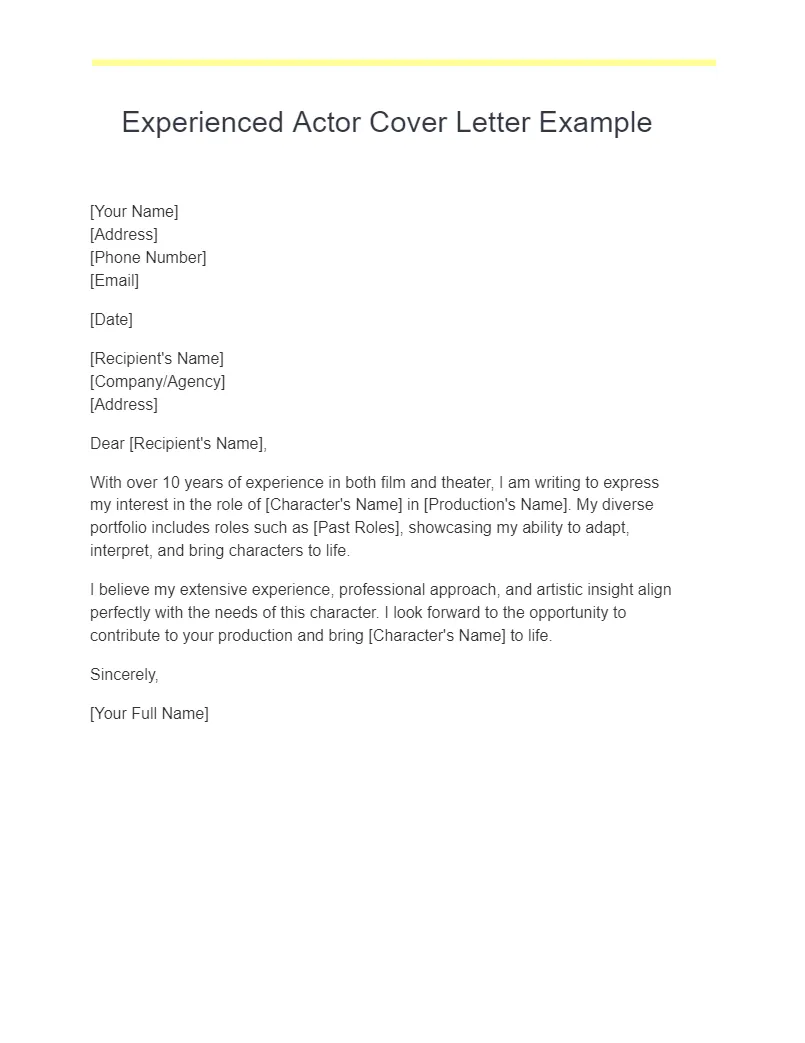
Cover Letter for Actors
In the competitive world of acting, a well-crafted cover letter is your secret weapon. It’s your first chance to make a lasting impression, showcasing your skills, personality, and passion for the craft. Unlike a resume, which provides a factual overview of your experience, a cover letter allows you to connect with casting directors and agents on a personal level. It’s not just about listing your credits; it’s about telling a story, demonstrating why you’re the perfect fit for a particular role or project. A compelling cover letter can significantly increase your chances of landing an audition or securing representation.
Why Actors Need a Cover Letter
Many actors underestimate the power of a cover letter, but it is a crucial element of your job application. It sets you apart from the hundreds of other actors who may be applying for the same role. A cover letter is your opportunity to go beyond the confines of your resume and provide a fuller picture of who you are as an actor and why you’re interested in this specific opportunity.
Highlighting Your Unique Selling Points

A cover letter lets you emphasize what makes you different. What unique skills, experiences, or perspectives do you bring to the table? This could be anything from your training and experience to specific accents you master or the types of roles you excel in. Highlight what makes you stand out from the crowd and capture the attention of the casting team.
Showcasing Your Personality
Your cover letter is also an opportunity to let your personality shine. Acting is a creative profession, and agents and casting directors want to see if you have the character and the unique spark that sets you apart. Let your genuine enthusiasm and personality come through. This doesn’t mean being unprofessional, but showcasing your unique perspective can make you memorable.
Understanding the Purpose of a Cover Letter
A cover letter is not just a formality. It’s a marketing tool. It serves to introduce you, highlight your qualifications, and most importantly, create interest. Its primary aim is to get you an audition. It’s your chance to demonstrate why you are the perfect fit for a role, and to persuade the recipient to call you in for an audition or invite you to join their roster.
How Cover Letters Get You Auditions

A well-written cover letter directly impacts your audition opportunities. It acts as a persuasive document that showcases your suitability for a role. It is your chance to emphasize skills that align with the job’s requirements, to express enthusiasm for the project, and to create a professional image that increases your chances of selection. A cover letter is your advocate, working to gain you an invitation to display your talent.
Demonstrating Professionalism
A cover letter demonstrates professionalism in your approach to acting. A cover letter shows that you take your career seriously. A polished and thoughtful cover letter shows that you pay attention to detail, respect the opportunity, and understand the significance of making a great first impression. This professionalism can make you more appealing to casting directors and agents.
Key Components of an Actor’s Cover Letter
Crafting a compelling cover letter requires attention to detail. Each section plays a crucial role in presenting you as a strong candidate. From the header to the closing, every element should be carefully crafted to highlight your best qualities and create a lasting impression on the recipient. Here’s a breakdown of the essential components of an actor’s cover letter.
Header

Begin with a professional header. Include your name, contact information (phone number and email), and the date. If you have an agent, include their information as well. This makes it easy for the recipient to contact you. The header ensures that the casting director or agent can quickly reach you if they are interested in your application. Ensure your contact information is up-to-date and professional-sounding.
Personal Introduction
Start with a compelling opening that grabs the reader’s attention. State the role you are applying for (or the reason for your letter, such as seeking representation) and how you learned about the opportunity. Briefly mention something specific that drew you to the project. Express your enthusiasm. Be direct, stating your objective clearly and with confidence. Make sure you customize the introduction to the specific opportunity.
Body Paragraph 1 Your Experience
In the first body paragraph, summarize your relevant experience. Focus on the roles or projects that are most applicable to the opportunity at hand. Highlight achievements or accomplishments that demonstrate your suitability for the role. Quantify your achievements whenever possible. For example, instead of just saying “starred in a play,” say “starred as the lead in ‘Hamlet,’ which received rave reviews.” Mention any awards, critical acclaim, or significant roles you have held.
Body Paragraph 2 Skills & Training

This paragraph should focus on your skills, training, and special abilities. List any relevant skills, such as dialects, stage combat, singing, or dancing. Mention any relevant training, such as acting classes, workshops, or degrees. Showcase any unique talents or experiences that could make you stand out. Tailor this section to the specific requirements of the role or agency. Highlighting your versatile skills can make you a more appealing candidate.
Body Paragraph 3 Enthusiasm & Availability
In the final body paragraph, express your enthusiasm for the project or agency. Reiterate why you are interested in the opportunity and what you admire about the company or production. Indicate your availability and willingness to audition. Include a sentence or two about your interest in the specific opportunity. Be clear about your availability for auditions and, if applicable, for the role. A concise and confident closing paragraph can leave a lasting positive impression.
Closing
End with a polite and professional closing. Thank the recipient for their time and consideration. Include a call to action, such as stating that you are eager to hear from them soon. Reiterate your contact information. Use a professional sign-off, such as “Sincerely” or “Best regards.” Always proofread the entire letter before sending it.
Formatting & Design

The appearance of your cover letter matters. Use a professional font (such as Times New Roman, Arial, or Calibri) and maintain a clean and easy-to-read format. Use clear spacing and avoid overly long paragraphs. Keep the letter concise, aiming for no more than one page. Proofread meticulously to ensure that there are no typos or grammatical errors. Your attention to detail will reflect positively on your professionalism.
Tailoring the Letter
A generic cover letter is easily spotted and often disregarded. To maximize your chances of success, it’s important to tailor each letter to the specific opportunity. This involves research, customization, and the strategic use of keywords to demonstrate your suitability for the role or project.
Researching the Role and Company
Before you begin writing, thoroughly research the role and the company or production. Understand the character, the plot, and the overall tone of the project. Find out about the company’s previous work and their values. This research will inform your letter, allowing you to tailor your content and demonstrate that you’ve taken the time to understand the opportunity. Showing that you are familiar with the company’s work demonstrates your serious interest and initiative.
Customizing Your Content

Use the information you gathered to customize your letter. Highlight the skills, experience, and personality traits that align with the specific role and project. Mention specific aspects of the company or production that resonate with you. Tailor your introduction and closing to show that you are genuinely interested in the specific opportunity. Customizing your content shows that you have taken the initiative to create a targeted application and are serious about the position.
Using Keywords
Carefully review the job description or casting call for keywords. Incorporate these keywords into your letter in a natural and relevant way. This helps ensure that your letter gets noticed and that your skills and experience align with the needs of the role. Make sure the keywords fit seamlessly into the context of your letter, rather than sounding forced or unnatural. Use keywords to align your application with the job requirements.
Examples of Effective Cover Letters
Reviewing examples can provide valuable insights into how to structure and format your own cover letter. These examples showcase different approaches to cater to various scenarios and career stages, illustrating the importance of personalization in your application.
Example 1: The Recent Graduate
This example shows how a recent graduate with limited professional experience can craft a compelling cover letter. It focuses on highlighting relevant training, showcasing enthusiasm for the role, and demonstrating a willingness to learn and collaborate. The aim is to demonstrate potential and a strong foundation in acting skills.
Example 2: The Experienced Actor
This example caters to actors with a substantial body of work. It demonstrates how to effectively summarize and highlight the most relevant roles and achievements. It also highlights specific skills and experiences that align with the job requirements. The emphasis here is on showcasing professional experience and demonstrating consistent performance.
Example 3: The Versatile Performer
This example illustrates how a versatile performer can present their range of skills and talents. It emphasizes various special abilities, such as singing, dancing, and accents, making the candidate stand out. It shows how to present multiple skills, training, and a diverse background to meet a range of different casting needs.
Common Mistakes to Avoid
Avoid these common pitfalls to ensure your cover letter is effective. Paying attention to these aspects can help prevent mistakes and significantly boost your chances of success.
Generic Letters
Never send a generic cover letter. Always tailor the letter to the specific role or agency. Generic letters lack the impact of a personalized one, failing to showcase your interest or demonstrate that you understand the opportunity. Always customize your letter to demonstrate your commitment and increase your chances.
Typos and Grammatical Errors
Typos and grammatical errors damage your credibility. Always proofread your cover letter multiple times before sending it. Use spell-check tools and, if possible, have someone else review your letter. These errors show a lack of attention to detail. Ensure your writing is free of errors and polished to a professional standard.
Overly Casual Tone
Maintain a professional tone throughout your cover letter. Avoid slang, jargon, and overly casual language. A professional tone shows you take your career seriously. While it’s important to let your personality shine through, always maintain a professional and respectful tone. Maintain a formal tone in your cover letter.
Lack of Focus
Make sure your cover letter has a clear focus. Stick to relevant information and avoid rambling or including unnecessary details. A focused cover letter presents you as a serious applicant. Ensure that your letter directly addresses the requirements of the role and highlight only relevant experience and skills. Ensure that every detail you include supports your application.
Additional Tips for Actors
Beyond the basics, these additional tips can give you an edge in the application process, helping you to stand out and increase your chances of success.
Get Feedback
Ask for feedback from trusted sources, such as acting coaches, mentors, or other industry professionals. Getting feedback can help you identify areas for improvement and ensure that your cover letter is effective. Ask for critiques from trusted sources and incorporate that advice. Constructive feedback can significantly improve the impact of your letter.
Proofread Carefully
Proofreading is crucial. Always proofread your cover letter multiple times and have someone else review it. Typos and errors detract from your professionalism and can hinder your chances of getting an audition. Make sure your writing is free of errors and polished to a professional standard. Your attention to detail will be noticed.
Follow Up
If you haven’t heard back within a reasonable timeframe (usually a week or two), follow up with a polite email. Briefly restate your interest in the role and reiterate your contact information. A follow-up demonstrates your enthusiasm. A polite follow-up demonstrates your ongoing interest and can serve as a reminder to the casting director. Follow up to express your continued enthusiasm.