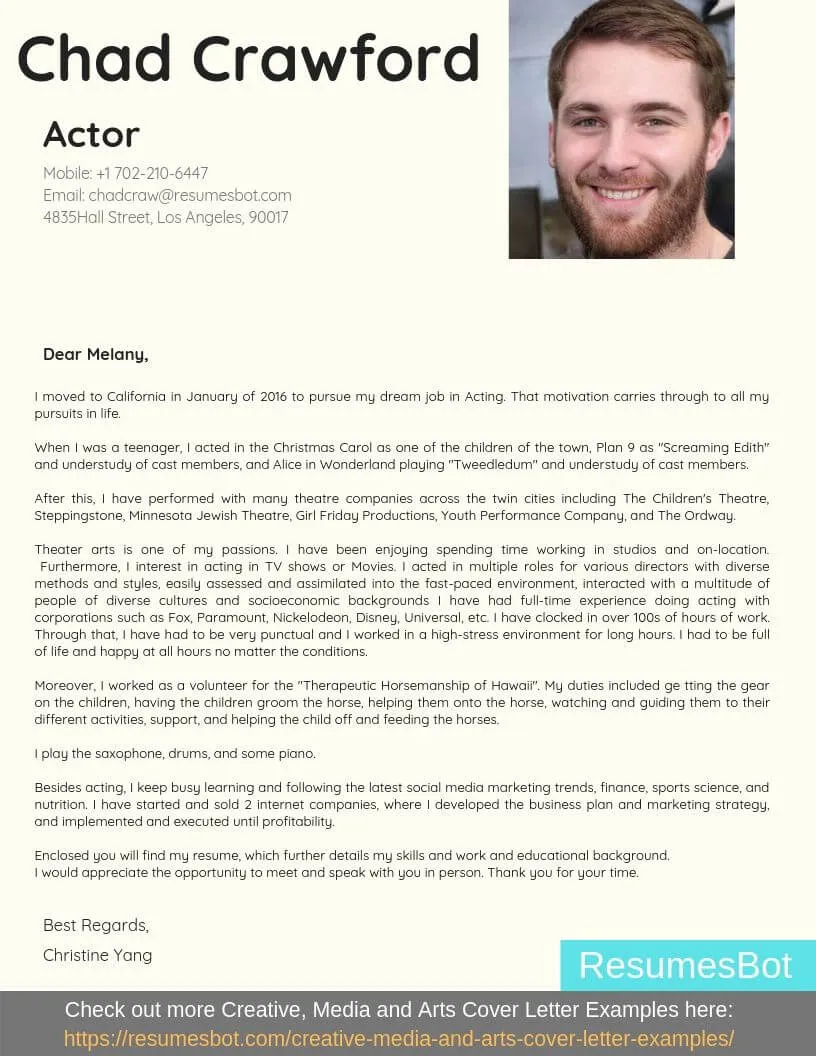
What is an Acting Resume Cover Letter?
An acting resume cover letter is a crucial document that accompanies your acting resume when applying for roles, auditions, or representation. It serves as your first introduction to casting directors, agents, or producers, providing a concise overview of your skills, experience, and enthusiasm for the specific opportunity. Unlike a general cover letter, an acting cover letter is tailored to the unique requirements of the acting industry. It’s a chance to showcase your personality, highlight relevant achievements, and demonstrate why you’re the perfect fit for the role or the agency. This document is not just a formality; it is a powerful tool that can significantly increase your chances of getting noticed and securing an audition. A well-crafted cover letter acts as your personal brand ambassador, setting the stage for your success in the competitive world of acting.
Why Do You Need an Acting Cover Letter?
In the acting world, where competition is fierce, an acting cover letter gives you an edge by providing context to your resume. It allows you to explain why you’re the right actor for a particular role or opportunity, going beyond the basic information listed on your resume. Cover letters allow actors to demonstrate their understanding of the specific project, which is incredibly valuable when applying for roles. In addition to expressing your enthusiasm for the specific role, you can use your cover letter to highlight any special skills or experiences that align with the requirements. It’s also a chance to showcase your personality and communication skills, demonstrating professionalism and genuine interest. In essence, a cover letter is your chance to make a positive first impression and persuade casting directors or agents that you are the ideal candidate. It’s a key step towards securing an audition and furthering your acting career.
Essential Components of an Acting Cover Letter

A well-structured acting cover letter includes several essential components to effectively communicate your qualifications and passion. Begin with a professional heading that includes your name, contact information, and the date. Address the recipient by name, if possible, showing you’ve done your research and are genuinely interested. The body of your letter should clearly state the role or opportunity you’re applying for, along with where you found the information. Then, highlight your relevant acting experience and skills, tailoring them to the specific requirements of the role. Always express your enthusiasm for the project and explain why you are a good fit for the opportunity. Conclude with a strong call to action, such as requesting an audition or interview. Keep your letter concise, typically within one page, and proofread carefully for any grammatical errors or typos. Each element contributes to making a compelling case for your candidacy, leading to a greater chance of a favorable response.
Formatting Your Acting Cover Letter
Proper formatting is crucial in making your acting cover letter professional and easy to read. Use a standard, easy-to-read font like Times New Roman, Arial, or Calibri, with a font size of 11 or 12 points. Ensure your letter is single-spaced with a space between each paragraph to enhance readability. Maintain consistent margins, typically one inch on all sides. Use a clear and organized layout, with a heading, salutation, body paragraphs, and closing. When submitting your letter electronically, save it as a PDF to preserve the formatting and ensure it appears correctly on all devices. Avoid excessive use of bold or italics, unless to emphasize specific points. Strive for a professional and polished appearance that reflects your attention to detail. A well-formatted letter communicates respect for the recipient and showcases your ability to present yourself professionally, an essential skill for any actor.
Personalizing Your Acting Cover Letter
Personalization is key to making your acting cover letter stand out from the crowd. Tailor each letter to the specific role or opportunity you are applying for, demonstrating that you have done your research and understand the project. Address the casting director, agent, or producer by name, if possible. Refer to the specific requirements of the role and highlight how your skills and experience align with their needs. Show genuine enthusiasm for the project by discussing what excites you about the script, the character, or the creative team. Whenever possible, mention any specific details you’ve learned about the project or the production company. This level of personalization shows that you are proactive and genuinely interested. By taking the time to customize your letter, you demonstrate your commitment and increase your chances of getting noticed and securing an audition. Always remember to proofread carefully, as personalization is wasted if there are any errors.
Writing a Compelling Opening

The opening of your acting cover letter is critical because it sets the tone and grabs the reader’s attention. Start with a strong and engaging opening sentence that immediately indicates your interest and the role you are applying for. If you know the name of the person you are addressing, use it; a personal touch can make a positive impact. Briefly state where you found the advertisement or information about the role. Immediately follow with a statement that clearly highlights your most relevant qualification or experience in relation to the role. Express your enthusiasm for the opportunity, such as by mentioning a specific aspect of the project that excites you. The opening should be concise, typically one or two sentences long, and should make the reader want to continue reading. A well-crafted opening sets the stage for the rest of your letter and makes a strong first impression.
Highlighting Relevant Experience
When highlighting your relevant experience in your acting cover letter, focus on the roles and projects that align with the specific opportunity. Tailor your description to mirror the requirements outlined in the audition notice or casting call. Briefly describe your role, the production company, and the timeframe. Quantify your achievements whenever possible, using specific examples to demonstrate your skills. For instance, instead of simply saying you played a lead role, mention the type of performance or the critical acclaim received. Include any specific skills that are relevant to the role, such as a particular accent, physical ability, or training. Ensure that you emphasize experiences that will attract the reader’s attention. By highlighting your experiences, you demonstrate why you’re the ideal candidate, and make a compelling case for the reader.
Showcasing Your Unique Skills
In your acting cover letter, showcasing your unique skills can make you stand out. Beyond your acting experience, mention any special abilities or talents that could benefit the role or project. This could include proficiency in a specific accent, fluency in other languages, skills in stage combat, singing, dancing, or playing a musical instrument. Include any relevant training, such as workshops, classes, or degrees. Highlight skills that are especially applicable to the role, or the project. Be specific and provide examples of how you have used these skills in previous work. This provides the reader with a fuller picture of your abilities and shows that you are a well-rounded actor. Showing that you bring more than just acting abilities to a role can significantly increase your chances of getting noticed.
Expressing Your Enthusiasm

Expressing genuine enthusiasm is essential for connecting with casting directors or agents. In your acting cover letter, express your excitement for the role, and the project. This can be done in several ways. First, discuss what appeals to you most about the script, the character, or the production. Mention how you connect with the story or what aspects of it resonate with you. Secondly, explain why you are particularly interested in working with the director, the cast, or the production team, if applicable. Make sure that your enthusiasm comes across as authentic, and not forced. Enthusiasm is contagious and can make the reader more inclined to give you a closer look. Your passion can set you apart from other actors.
Closing Your Acting Cover Letter
The closing of your acting cover letter should be concise and action-oriented. Thank the reader for their time and consideration. Reiterate your interest in the role and express your hope for an audition. Include a clear call to action, such as stating that you are available for an interview or audition at their earliest convenience. Provide your contact information again, including your phone number and email address, to make it easy for them to reach you. Use a professional closing, such as “Sincerely” or “Best regards,” followed by your full name. Ensure your closing paragraph leaves a strong and positive final impression and encourages them to take the next step. Always proofread to confirm that your closing is perfect and error-free.
Proofreading and Editing Your Cover Letter
Proofreading and editing are essential to ensure your acting cover letter is error-free and professionally presented. After writing, review your letter carefully for any grammatical errors, spelling mistakes, or typos. Check the formatting to ensure it is consistent and easy to read. If possible, ask a friend, colleague, or mentor to review your letter as well. Having a second pair of eyes can help catch mistakes you might have missed. Pay special attention to the details, such as correct names, dates, and titles. Errors in your cover letter can undermine your credibility and make you appear unprofessional. A well-proofread and edited letter shows that you take pride in your work and pay attention to detail. It’s a critical step in making a positive impression and increasing your chances of securing an audition or representation. Ensure that your final product reflects your best self.