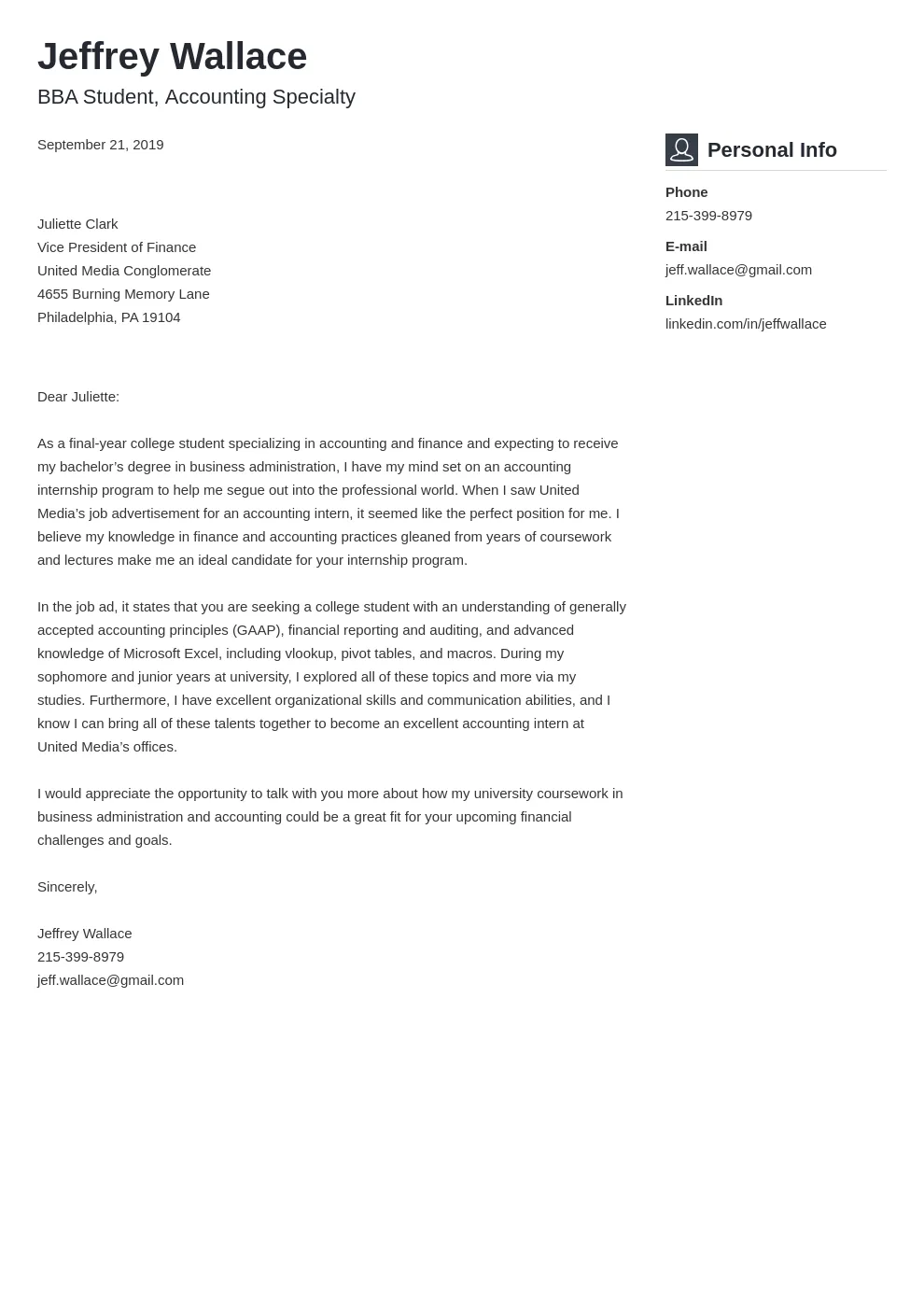
What is an Accounting Cover Letter?
An accounting cover letter is a crucial document that accompanies your resume when applying for an accounting position. It serves as your introduction to a potential employer, providing a glimpse into your professional background, skills, and qualifications. Unlike a resume, which offers a factual summary, a cover letter allows you to showcase your personality, express your interest in the specific role and company, and elaborate on why you are the ideal candidate. It’s your chance to make a strong first impression and persuade the hiring manager to delve deeper into your qualifications. The cover letter acts as a personalized marketing tool, demonstrating your enthusiasm and suitability for the job, far beyond what a resume alone can convey. A well-crafted cover letter can significantly increase your chances of landing an interview, setting you apart from other applicants.
Why You Need an Accounting Cover Letter
In the competitive field of accounting, a cover letter is not just an optional add-on, but a necessity. It allows you to personalize your application and demonstrate a genuine interest in the specific opportunity and company. A cover letter provides the opportunity to tailor your application to the specific requirements of the job posting, highlighting the skills and experiences most relevant to the role. It allows you to explain gaps in your employment history or career transitions, providing context and demonstrating your proactive approach. Furthermore, a cover letter showcases your writing and communication skills, which are highly valued in accounting roles. It helps you demonstrate your personality and enthusiasm, making you more memorable to the hiring manager. By taking the time to write a thoughtful cover letter, you are signaling to the employer that you are committed to the application process and are truly interested in the position, increasing your chances of getting an interview.
Essential Elements of an Accounting Cover Letter

Crafting a compelling accounting cover letter requires careful attention to detail and a strategic approach. There are several essential elements that must be included to make a strong impression. Start with a professional header that includes your contact information and the date. Address the letter to the hiring manager by name whenever possible, demonstrating that you have done your research. The body of your letter should be structured with a clear introduction, showcasing your interest in the role and the company. The main body should highlight your relevant skills, experiences, and achievements, backed by quantifiable results whenever possible. Tailor your content to the specific requirements of the job description, showing that you have the necessary qualifications. The closing should reiterate your enthusiasm and include a call to action, such as requesting an interview. The overall tone should be professional, enthusiastic, and focused on the value you bring to the organization. A well-structured cover letter will increase your chances of getting noticed by the hiring manager.
Contact Information and Introduction
Your contact information should be placed at the top of your cover letter, including your full name, phone number, email address, and optionally your LinkedIn profile URL. This allows the hiring manager to easily contact you if they are interested. Always use a professional email address. The introduction is your opportunity to make a strong first impression and grab the reader’s attention. Begin by stating the specific position you are applying for and where you saw the job posting. Briefly express your enthusiasm for the role and the company. Consider adding a short, impactful sentence that highlights your key qualification or a significant achievement that aligns with the job requirements. This opening statement should be concise and engaging, capturing the reader’s interest and encouraging them to read further. A strong introduction sets the tone for the rest of the letter, showcasing your personality and professionalism. The introduction helps demonstrate your genuine interest and sets you apart from the sea of applicants, thus increasing your chance of an interview.
Highlighting Your Skills and Experience
The main body of your cover letter is where you demonstrate your qualifications and suitability for the accounting position. Focus on the skills and experiences that are most relevant to the job description. Carefully review the job posting and identify the key requirements. Provide specific examples from your past roles where you successfully applied those skills. Use action verbs to describe your accomplishments, such as ‘managed,’ ‘analyzed,’ ‘prepared,’ or ‘reconciled.’ Quantify your achievements whenever possible, for instance, stating the amount of money you saved the company or the number of accounts you managed. Use bullet points to list key skills or experiences, making them easy to read and digest. Customize your content for each application, demonstrating that you have read the job description and are a good match for the role. Emphasize how your skills and experience align with the company’s needs and contribute to its success. Tailoring your skills and experience to each job helps demonstrate a high degree of interest and increases your chances of getting noticed.
Quantifying Your Achievements

One of the most effective ways to impress a hiring manager is by quantifying your achievements. Instead of simply stating that you have experience in a certain area, provide specific, measurable results that demonstrate your impact. Use numbers and statistics to showcase your accomplishments. For example, instead of saying that you ‘improved efficiency,’ state that you ‘reduced processing time by 15%.’ Instead of saying you ‘managed accounts payable,’ indicate that you ‘managed accounts payable for over 500 vendors with a high degree of accuracy.’ Use percentages, dollar amounts, and other metrics to bring your accomplishments to life. Highlight instances where you saved the company money, increased revenue, or improved productivity. Quantifying your achievements provides concrete evidence of your value and ability to deliver results. This allows the hiring manager to understand your contributions and how you can benefit their organization. It is a powerful way to differentiate yourself from other candidates and make a memorable impression. It leaves a lasting impression, unlike vague descriptions.
Demonstrating Your Knowledge of the Company
Demonstrating your knowledge of the company is a vital step in creating a successful cover letter. It shows that you have taken the time to research the organization and are genuinely interested in the opportunity. Before writing your cover letter, research the company’s mission, values, products or services, and recent news. Visit the company’s website, read their social media pages, and look for any press releases or articles. In your cover letter, mention specific aspects of the company that resonate with you or that align with your career goals. Reference any relevant projects, initiatives, or goals that the company is currently focused on. Demonstrate how your skills and experience can contribute to the company’s success. Personalize your cover letter by addressing the hiring manager or the company’s specific needs, rather than sending a generic application. Mentioning specific company details demonstrates your commitment, enhances your credibility, and shows the recruiter your research is genuine.
Showcasing Your Soft Skills
While technical skills are essential in accounting, employers also value soft skills, which are interpersonal and professional qualities. Highlight your soft skills in your cover letter to demonstrate your ability to work effectively within a team and contribute to the company culture. Include your communication, problem-solving, and organizational skills. Provide examples of how you have used these skills in past roles. For instance, describe a time when you successfully communicated complex financial data to non-financial stakeholders. Mention instances where you successfully resolved a complex accounting issue. Showcase your teamwork abilities by describing your role in a project. Include examples of your strong work ethic, time management skills, and ability to meet deadlines. Emphasize your adaptability and willingness to learn new skills. Demonstrating your soft skills shows that you are a well-rounded candidate and can thrive in a professional environment. By combining your technical skills with your soft skills, you present a complete picture of your capabilities and improve your chances of a job offer.
Closing Your Cover Letter

The closing of your cover letter is your final opportunity to make a strong impression. Summarize your key qualifications and reiterate your enthusiasm for the position. Express your gratitude for the hiring manager’s time and consideration. Include a call to action, such as requesting an interview or expressing your availability for a follow-up conversation. State your eagerness to discuss your qualifications in further detail. Maintain a professional and confident tone throughout your closing. End your letter with a formal closing, such as ‘Sincerely’ or ‘Best regards,’ followed by your typed name. Proofread your closing carefully for any grammatical errors or typos. Ensure that your closing paragraph reinforces your value as a candidate and encourages the hiring manager to take the next step. The closing makes a strong impression on the hiring manager. A well-crafted closing reinforces your strengths and increases the likelihood of a positive response.
Proofreading and Editing Your Cover Letter
Proofreading and editing your cover letter is a critical step in ensuring that your application is polished and professional. Errors in grammar, spelling, or punctuation can undermine your credibility and damage your chances of landing an interview. Before submitting your cover letter, carefully review it for any mistakes. Use a spell checker and grammar checker, but also manually proofread your letter to catch any errors that the software might miss. Read your cover letter aloud to identify awkward phrasing or sentences that don’t flow smoothly. Have a trusted friend or family member review your letter for feedback and suggestions. Check for inconsistencies in formatting, such as font size, spacing, and alignment. Ensure that your contact information is correct and up-to-date. Ensure that the letter is error-free and well-organized. A meticulously proofread and edited cover letter demonstrates attention to detail and professionalism, which are essential qualities in the accounting field. This will help increase your chances of a successful job application.
Formatting Your Accounting Cover Letter
Proper formatting is an integral aspect of a professional cover letter. Choose a clean and easy-to-read font, such as Times New Roman, Arial, or Calibri, with a font size between 10 and 12 points. Use consistent formatting throughout the document, including margins, spacing, and alignment. Use single spacing within paragraphs and double spacing between paragraphs. Use a standard business letter format, with your contact information, the date, and the hiring manager’s contact information at the top. Use left alignment for your text, and avoid using excessive bolding or underlining. Break up your text into concise paragraphs with clear headings. Maintain a professional and consistent tone throughout your cover letter. Save your cover letter as a PDF file to preserve the formatting and ensure that it looks the same on any computer. The formatting helps make the cover letter easy to read and visually appealing. Well-formatted cover letters make a great impression on the hiring manager.